Here Comes Braylynn

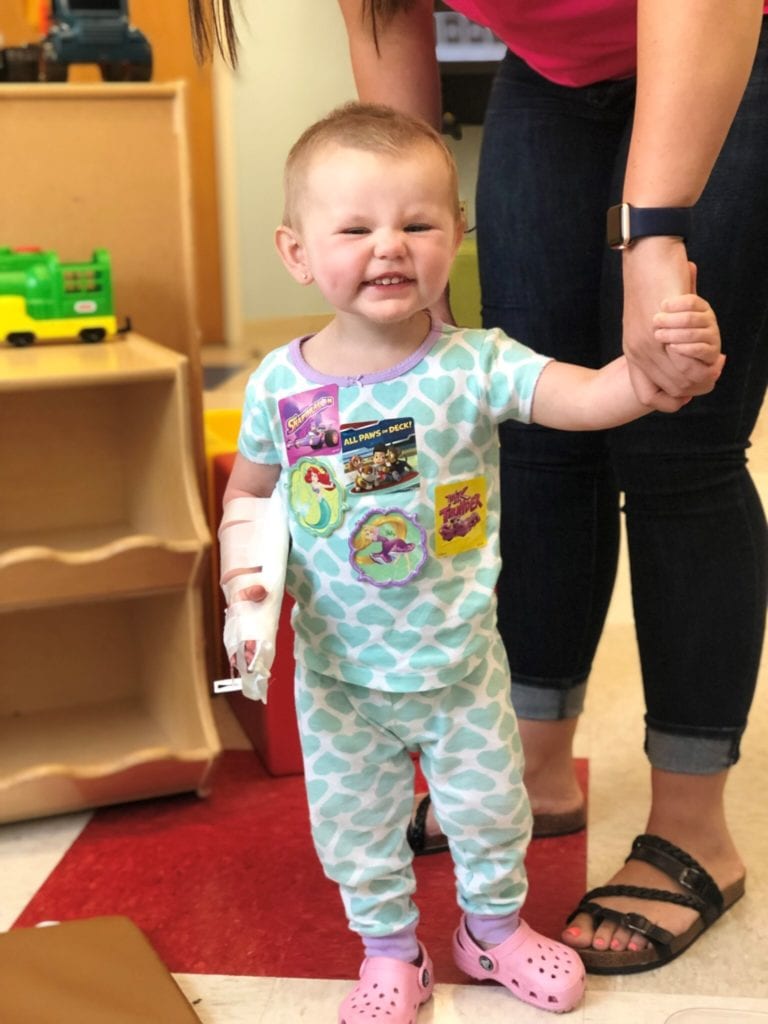
If you hear a squeaking sound, it might be Braylynn headed your way! Thanks to her favorite pair of shoes, her nurses all know when she’s coming and get ready with arms wide open.

The fact is, sweet Braylynn has spent way too much time in the hospital. Since her diagnosis in 2017, she has learned to walk in the hospital, met her baby brother in the hospital, and grown up around needles, tubes, and nurses. She will turn two in August and has spent an unbelievable 245 days in the hospital.

Once she learned to walk, seeing her toddle up and down the hospital halls became a common sight.

It started with a runny nose and fever that wouldn’t go away. Her mother took her to the pediatrician in Hazelhurst. He felt swollen lymph nodes at the base of her skull and knew immediately something was very wrong. His experience told him it was leukemia, and a blood test confirmed it.

“After he told me she had cancer, I couldn’t get my mom or husband on the phone,” said Braylynn’s mother, Drew. “I panicked because we don’t have any cancer in my family history, and I didn’t even know kids could get cancer. All I could think was that I might lose my baby.”

As her family learned of the diagnosis and began arriving at the hospital, Drew was able to collect herself for the long ride to Savannah where Braylynn would be treated. There they would learn that Braylynn had infantile leukemia with a mutation that made it high risk. In fact, it was the hospital’s first case in seven years.

Braylynn began treatment right away. She reached remission quickly, and fortunately, there was an open clinical trial designed specifically for her cancer’s mutation. She began the trial drug, and after just four rounds the trial chemo worked to reduce the effect of the mutation.

The side effects were brutal though. Braylynn had severe mouth sores and a diaper rash bad enough that the hospital’s burn unit evaluated her and brought a cream to sooth the rash. Because she was so young, the chemo was always hard on her, which is why she spent so many days inpatient. She is finished with that now and takes an oral chemo that doesn’t seem to bother her.

Since she is at home more often, Braylynn can enjoy being outside, her dogs, and her little brother, Luke.

“Luke is her world,” Drew said. “He was born while she was in treatment and every day she was there, he was too because I wouldn’t leave either one of them. It’s hard to keep a toddler happy while they are confined to a room. That’s why she spent so much time roaming the halls with the nurses. She loves those nurses.”

Due to her treatment, Braylynn’s speech is somewhat delayed but she is catching up now. Drew doesn’t know exactly when Braylynn’s treatment will end, but she is confident Braylynn will keep running and squeaking until she can say goodbye to the hospital for good.

The Low Country Annie Oakleys & CURE

“Aim at a high mark and you’ll hit it. No, not the first time, nor the second time. Maybe not the third. But keep on aiming and keep on shooting for only practice will make you perfect.”


That quote was written by Annie Oakley and there is a group of women who get together every month to practice their aim.

The Low Country Annie Oakleys started over nine years ago with the mission of enhancing and promoting the sport of clay shooting for women and raising funds for local charities which support the health of at-risk children in the Low Country region. This area includes parts of Georgia and South Carolina. They are a diverse group of women united by a common love of shooting.


And they are serious about helping local children. Five years ago, they started a charity clays tournament. Their goal was to name a room at the local children’s hospital with a donation of $25,000. Their inaugural shoot raised five times that amount. Since then they have named operating rooms, the intensive care nurses’ station, and the pharmacy with proceeds from the next two shoots. In just four years, they have raised and donated more than $700,000 to the hospital, a food bank for children, and the local Boy’s and Girl’s Club.

This year they have added CURE Childhood Cancer as a beneficiary for their 5th annual Charity Clays on October 11.

“Our goal is to get to $1 million donated,” said Nancy Thomas, one of the co-chairs for the event. “We are a group who loves to shoot, but we also want to make a difference in the area where we live, and we have seen the important work CURE is doing in the lives of children fighting cancer.”

These women are definitely making a difference. The event is limited to 40 teams and sells out quickly. Sponsors such as Presenting Sponsor, Springer Mountain Farms, also help them to reach their goals. And the day-long event includes raffles for a Caesar Guerini shotgun raffle and David Yurman matching bracelet and earrings set, a bourbon tasting, and an After Party with awards, cocktails, hors d’oeuvres, silent auction, and live music.

Remembering Sam

Annamarie Robb

Sam’s mom

Losing Sam was a defining moment in our family’s life. It seems like yesterday he was with us: young, vibrant, and full of life. But we have come to understand life continues even if sometimes it feels as though there is no way it should. The sad reality is Sam’s passing is more than ten years but less than twenty. As with each of the more than ten years, we continue to reflect on the life we cherish and the things we hold dear – like the twenty years we did have with Sam, but we are too often reminded of the painful impact the disease on young people in our communities and their families.
To this day, Sam’s appreciation for each day of his short-yet-full life is a resounding testament to the fragility and beauty of our human experience. We are so grateful to have this legacy to carry with us forever and to motivate our efforts in supporting pediatric cancer research. We cannot express fully our most sincere thank you to those who support our endeavors and to those who continue to cherish Sam’s memory just as much as we do. His life left an impact on our lives that is dwarfed only by the impact of his absence. Your continued support and love for Sam’s life assuages our grief.
Beyond the memory of Sam, our family is continuously heart-broken to hear of the impact the disease that took him from us is having on young people within our community and their families. For what is called a “rare” bone cancer, its mark feels all too common. This feeling motivates us even further to continue our commitment to finding a cure for these young people, who deserve a full life ahead of them. For Sam, we are grateful cancer research gave us four years of remission. As we reflect on the anniversary of Sam’s passing, we send our most heartfelt sympathies to the families that are in the grips of what we felt on this day over ten years ago. Then and now, our work, Sam’s legacy, and the legacy of every child lost to childhood cancer, is not done.
In the past twelve years, your support and our efforts for Sam’s fund within CURE have raised more than $950,000 towards childhood cancer research. Together, our work has funded five Sam Robb fellows who are providing care for children in five different states. Furthermore, we continue to support the Open Arms Program which provides meals for patients and families while in the hospital and are expanding our efforts to support the Partners in Care Counseling Program which provides counseling services to patients and families affected by childhood cancer. We look forward to the coming year with hope and optimism as we seek to surpass our one-million-dollarmark and continue to make in impact on the young people we admire and miss so dearly.
Thank you for your love and support these past twelve years; we hope that you will continue to join us as we battle childhood cancer with committed doctors searching for targeted treatments.
With Hope,
Sam, Annamarie, Liz, Caroline & Katherine

Food for Thought: Feeding Concerns in Survivorship

Kaitlin B. Proctor, PhD
William Sharp, PhD,
Jordan Gilleland-Marchak, PhD, ABPP

Long-term survivorship care involves comprehensive medical monitoring, including weight, growth, and nutrition. Survivors who received certain treatment agents are at increased risk for cardiac, bone mineral density, or metabolic problems, making adequate nutrition and weight management especially important. Aspects of the cancer treatment may also place some survivors at higher risk for difficulties with feeding and weight management. Side effects from some cancer treatments may lead to difficult or painful eating experiences. These experiences may create an association with feeding that may result in a child avoiding food due to fear of pain or discomfort. Alternatively, a young child may have missed some developmentally normative experiences with learning to feed during treatment due to reliance on internal feeds or required changes in dietary intake (e.g., focusing on meals involving highly preferred foods to meet caloric needs). A subset of survivors experience ongoing challenges related to feeding or food aversion which continue even after active symptoms causing pain or discomfort with eating have resolved.

What is normal: Periods of pickiness and/or changing food preferences, as well as variations in hunger, appetite, and interest in eating. This may include changes like suddenly refusing a previously enjoyed food or refusing all foods with certain characteristics, like foods that are green. For children who are exhibiting developmentally normal pickiness related to food, you may consider trying one of the following strategies:

1. Provide consistent, structured mealtimes with predictable expectations.

2. Provide multiple opportunities to try novel foods prepared in a variety of ways, as research has shown that it takes eight to 15 exposures for a child to develop comfort with a new food. When offering new foods, present small amounts of the new food initially as this experience will likely be challenging for children with picky eating. For example, provide a few bites rather than a heaping portion until the child is consistently more comfortable with the food. Reducing the amount of food may increase the child’s likelihood of exploring the new food and promote success.

3. Enrich the meal environment through the use of praise for desired mealtime behaviors, such as sampling bites of non-preferred or new foods, as well as other mealtime behaviors like remaining at the table, using good table manners, etc.

4. Minimize attention (even negative attention, like coaxing or scolding) for undesirable mealtime behaviors like whining or negative statements about food.

Beyond picky eating: A subset of survivors may restrict the volume and/or variety of food being consumed during meals based on their medical history. This may present as severe food selectivity (such as complete rejection of one or more food groups along with high preference for snacks, fats, and processed foods), as well as frequent and intense behaviors to avoid food, which may be confusing and challenging for families. Children with this level of mealtime concern meet criteria for Avoidant Restrictive Food Intake Disorder (ARFID).

Possible symptoms include:

. Poor weight gain/growth or significant weight loss
. Dependence on a bottle, formula (e.g., Ensure, Pediasure), or feeding tube
. Mealtime tantrums or prolonged meals lasting longer than 40 minutes
. Distress and anxiety with foods, especially new foods
. Inability to increase the texture of foods (e.g., moving from purees to table foods)
. Extreme pickiness (accepting less than 12 foods)
. Excessive weight gain as a result of severe food selectivity.

Children whose feeding problems impact health or nutritional status may require higher levels of support. If you are concerned, talk with your child’s survivorship care provider or primary care physician to discuss whether a referral for additional assessment would be beneficial. It is important to match the level of support with the severity of the feeding problems. For mild feeding concerns, nutrition education with a dietitian or outpatient intervention with speech-language pathologists, oral motor therapists, or behavioral therapists can be beneficial to address specific feeding difficulties.

Children’s Healthcare of Atlanta offers a multi-disciplinary feeding program for children with more complex feeding problems. This program has demonstrated excellent effects for patients and families. Additional information on pediatric feeding disorders can be found at feedingmatters.org.

Helping Siblings Cope

Erin Nicolas, MS, LPC, CPCS, RPT-S

When a child is first diagnosed with cancer, the parents’ focus is inevitably on getting their child the care and treatment needed. This focus continues through treatment and can last months or even years. It is the natural and logical focus for parents, and even siblings would agree that parents must attend to the sick child. Parents also do everything they can to ensure the siblings are taken care of. However, with doctor’s visits, hospital stays, and inevitable emergencies, siblings are bound to get less attention, and their own struggles to cope with their brother or sister’s illness may go unnoticed. To help siblings cope, it is helpful for parents to know how children process major life events in the first place.

Children cope with major life events in bits and pieces. Within a 20-minute period, they may go from crying with sadness to laughing hysterically at something they saw on TV. Children rarely sit around and ruminate on difficult topics. This behavior can seem erratic and even inappropriate at times, but it is what children do. Children also process through play, not words. It can be difficult to sit down and have a long conversation with your five-year-old about her sister’s battle with cancer, but playing with her will may allow you to convey information better and result in some level of understanding. Play is a child’s most natural and comfortable language, so we need to let them use it to process major changes. Lastly, children tend to focus more on how they are going to be affected by their sibling’s diagnosis rather than how others are affected. This isn’t selfishness. It is developmentally appropriate.

So how can you tell if your child is struggling with her sibling’s illness? Remember that children don’t often tell us their problems. They show us. The first sign that your child is struggling is behavior change. Some children act out to get attention while others may withdraw. Those who withdraw often do so because they don’t want to be more of a burden to their parents. Losing focus and dropping grades at school are also a sign of struggle as well as changes in sleeping and eating habits.

Children are easily affected by their environment so when life gets disrupted by something as big as cancer, children are disrupted as well. They mimic what is going on around them. Another sign of struggle is when your attempts to comfort them never seem to be enough. Lastly, children will often isolate themselves from friends or lose interest in things they used to enjoy.

Helping your children becomes the next challenge. It can be exhausting trying to find time for everyone when you are juggling medical care, work, and the needs of the family. Here are a few tips to help siblings get through this difficult time:

  • Keep the rules the same. There will always be exceptions and special circumstances, but consistency should be a priority.
  • Keep to your routine as consistent as possible. Bed times, homework routines, etc. need to stay the same whenever possible. Consistency makes life feel more stable and secure.
  • Be honest and age appropriate with the information that you share. Younger children obviously need less detailed information, but they do need to know how side effects may affect their sibling. For example, they need to know that treatments will make their sibling more tired and less likely to feel like playing. Allow them to ask questions and don’t be afraid to say “I don’t know.” Remind them regularly that cancer is no one’s fault.
  • Set up regular family meetings to check in. Keep the conversation open.
  • Play with them when you can.
  • Utilize choices whenever possible. Children feel more in control of their world when they are able to make choices, even choices as simple as what snack to pack for school.
  • Keep your kids in as many of their regular activities as possible. They need to know that it’s okay to still have fun.

Coping with cancer is never an easy task, especially when a child is the one who is suffering. Just remember, your whole family is in this together and all of your children need your attention more than anything else. So you may need to put off cleaning and laundry – or ask others to help so you can spend time with siblings.  They will be grateful for your love and hugs.

3 Steps to Financial Peace During Crisis

Alan Thomson, Certified Financial Planner

Peace: Stress-free state of security and calmness; the absence of mental stress or anxiety

Most will concede that peace in our lives is a bit of an elusive concept. Like many who are reading this article, childhood cancer assaulted my family’s stress-free state of calmness just over 15 years ago. Having spent my working days in the financial services world, I have come to believe that financial peace is no less elusive. Below are some thoughts on finding financial peace, particularly after our world has been under siege.

We reasonably believe the story that financial peace is a result of saving 20% of one’s income, living within ones means, and planning for the future. To be clear, these are all good things in and of themselves. However, they don’t hold the keys to financial peace. In fact, in the hardest times of our lives, these “keys to success” may only serve to frustrate our sense of financial peace.

Personal financial planning often centers on the balance of short and long-term goals with our needs and wants. When crisis erupts – such as when we watch our children fight for their lives, our short-term long-term scales cease to operate correctly. Indeed, for many of us the scale may completely break as we avoid making decisions with our personal finances.

After the trauma, how do we navigate back to a financial peace that eludes many in the best of circumstances? Though there is no definitive recipe, the below represent my thoughts and experiences. They are stepping stones I identified as a financial planner a few years after my wife and I lost our daughter, Hayley, to AML.

Grace  Putting together a bookshelf or installing a new garbage disposal? Maybe those are times when we can skip step one. This is not the case after a crisis; all steps must be followed and the first is giving grace. Allow yourself and your partner and your family to feel extra helpings of grace with regards to financial decision making, past financial mistakes, or general avoidance. Everyone reacts differently to the challenges faced when peace is removed, and the stress may take their financial habits to different and possibly competing extremes.

Trauma may create doubt about the future and foster a carpe diem financial mentality. Conversely, traumatic experiences may also lead us to overprepare and hoard finances. Communication is essential to recovery, and during those conversations, let grace abound. Regardless of how family trauma tilts your short-term and long-term scales, recognize the changes and be generous with grace as you and your family navigate your new financial world.

Joy  Most of us reasonably question how we will once again find joy after a trauma. We have seen the most innocent among us suffer deeply and joy may evade us for a season. What we have experienced, though, gives us a new insight as to where we find durable joy.

Ultimately, the suffering with which we have come face to face exposes the false joys and gives us clarity: clarity that our happiness going forward will be based neither on our balance sheet, nor income statement, nor upon any of the stuff our finances may afford. Rather, our deeper, more durable view of joy in our lives becomes elemental as we continue down our path towards financial peace.

Purpose represents the third stepping stone on our journey. When our worlds are shaken, so too are our priorities. We ask ourselves, why? Why us? Why our family? Naturally, we will struggle with our purpose, and specifically the purpose of our suffering. I firmly believe finding the purpose of our struggles is not terribly important. Believing there to be a purpose, though, is critical. By what other means can we possibly proceed into a future filled with just as many unknowns as our past?

When we recognize that there is purpose to our circumstance, we find encouragement to return to our short-term and long-term scales and re-calibrate them correctly. Our scales will never return to their original settings. We will recalibrate them informed by a past filled with heartache and grace, a present experienced with a more meaningful understanding of joy, and a future resting on the firm belief in a purpose to our challenges and our financial decisions. Yes, our scales will forever be set at a custom calibration… and that is a good thing.

Lendmark Climbs to a Million and Beyond

Would you walk a track or climb stadium stairs for two hours if it would make a difference for children with cancer? That is the question put to the employees of Lendmark Financial Services by CEO, Bobby Aiken. And for the third year, the answer was a resounding “yes!”

Bobby is passionate about finding cures for childhood cancer. Over the past decade, he has known three different young men who were diagnosed with varying types of cancer. All three survived, but their individual journeys caused Bobby to step back and rethink his view of challenges.

It was Chip Madren who had the most profound effect on Bobby. Bobby and Chip’s father, Ken, have been friends since childhood. The Friday before Chip was diagnosed with Stage IV Metastatic Anaplastic Medulloblastoma and given a very slim chance for survival, the three were fishing together – a normal weekend. But the news that broke on Monday was staggering.

“In less than five days, we fished, laughed, ribbed one another, encountered a diagnosis of cancer, endured the first of many surgeries, and felt hearts breaking all around us.” Bobby recalled. “I’ll never forget the tears that filled the eyes of my family when I shared the news. Life kind of seemed to stop in its tracks.”

As difficult as the early days were, it is the path since then that served as an inspiration to Bobby.

“I watched Chip literally fight for his life and win,” he said. “Chip’s fight has made me a better person and has positively impacted many, many lives.”

Bobby is a stadium runner and has spent the last few years thinking about Chip and kids like him who are facing the challenges of cancer while running. He had an idea. What if he took his love of stadium running and turned it into a fundraiser, engaging his company’s employees, partners and vendors in the fight against childhood cancer. The Climb to a Million was born.

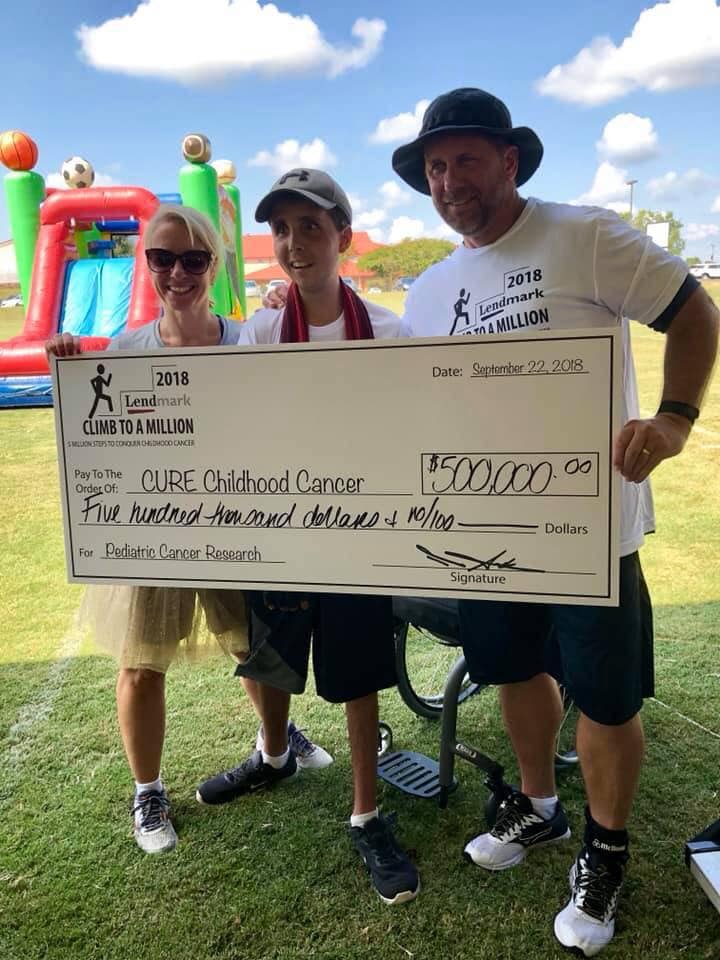
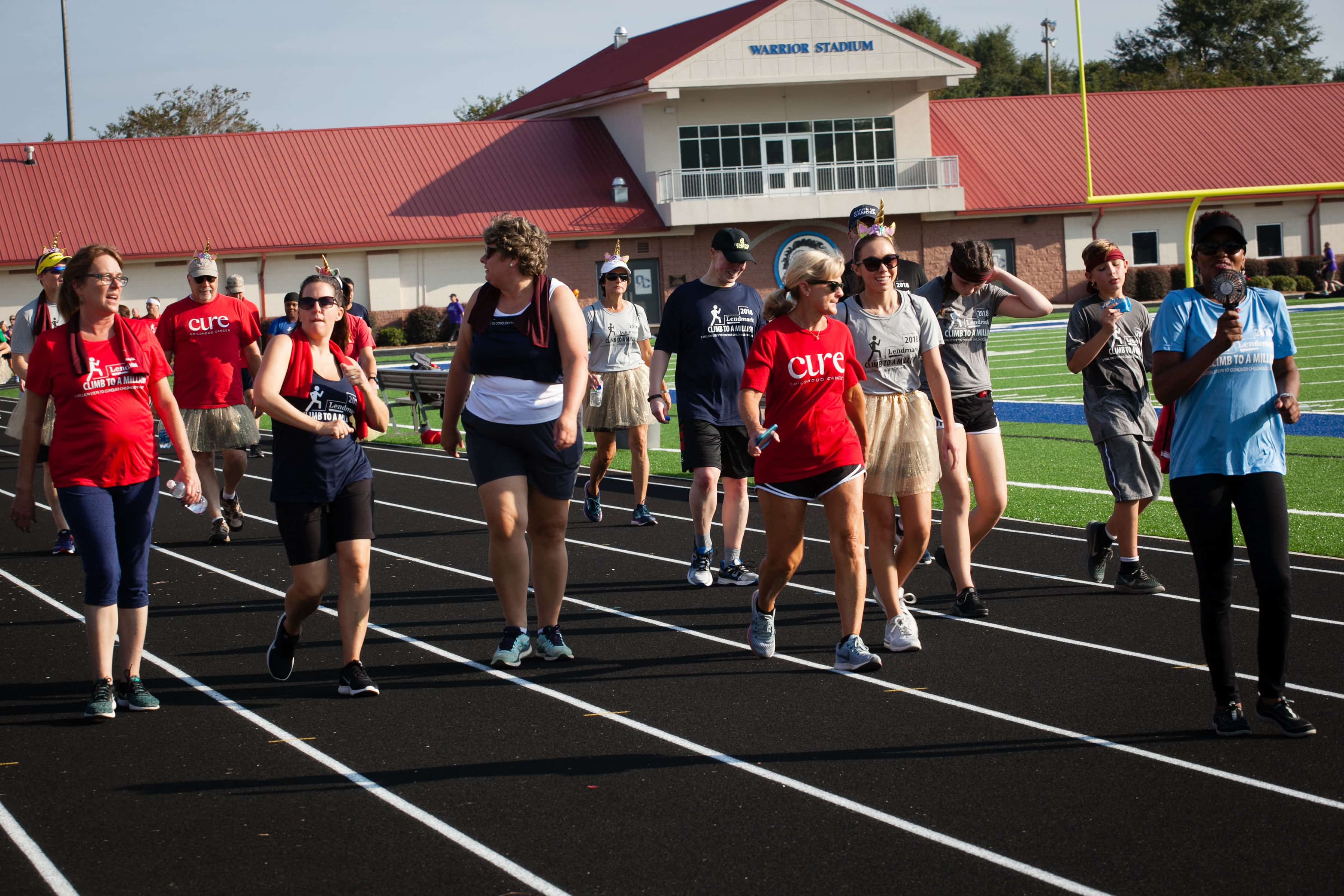
In its first year, the climb raised $282,000 and $505,000 in its second. On September 22, 2018, Lendmark employees from all around the country gathered at the Oconee County High School stadium as a part of the third Climb to a Million to climb, walk, and sweat. Unlike most extended workouts, the spirit wasn’t somber or intense. Rather, there were smiles, laughs, and encouragement as everyone put in their steps toward the goal of raising $500,000 to fight childhood cancer.

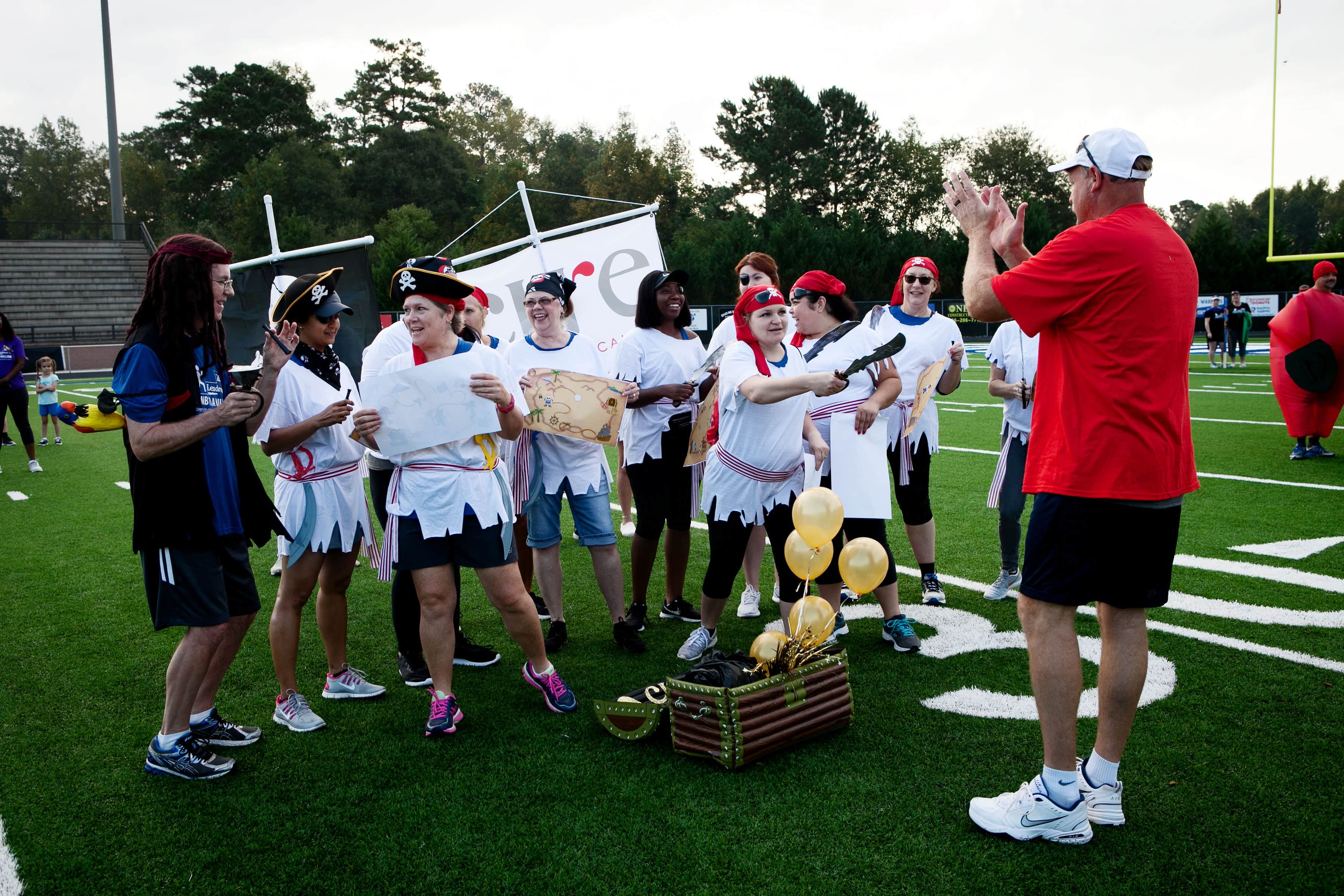
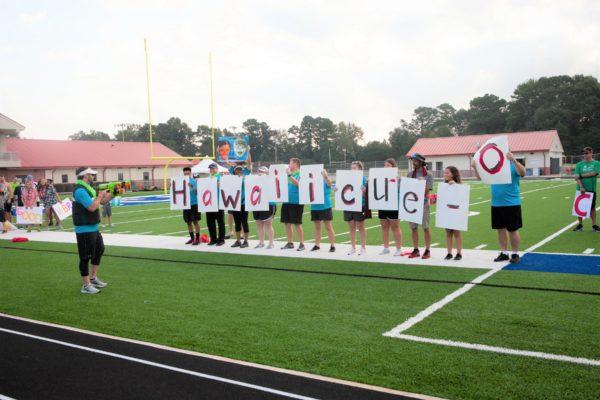
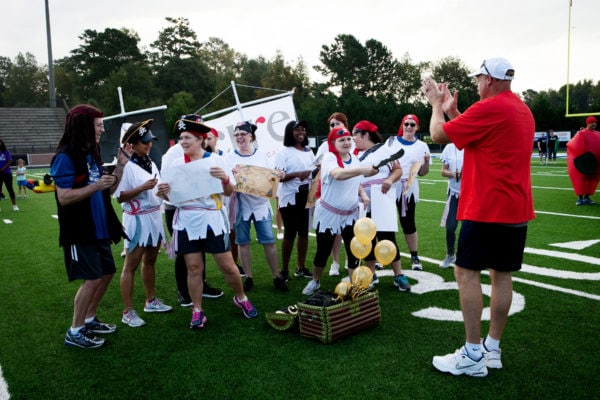
But it was more than a workout. The morning started with skits by fundraising teams such as Cancer Busters, Pirates of the CUREibbean, and Hawaii-CURE-O. There was even a rousing song that got the crowd hopping: C-U-R-E to the tune of YMCA. Following the fun, everyone hit the track to put in their steps. Working together, they again surpassed the $500,000 mark making the three-year total more than $1,300,000 to fight childhood cancer. They want the money raised to support CURE’s precision medicine initiative, which involves precise, gene-based treatment.

“We are part of the precision medicine engine now,” says Ethan Andelman, Lendmark’s Chief Marketing Officer. “We want to see this innovative form of treatment become available for all children with cancer. We want to be a part of making that happen.”

While it started with the CEO, Bobby won’t take credit. “The Madren family is one of thousands that have to take on this fight every day,” he said. “It’s hard on every one of them and it’s a fight for every child. It takes every characteristic of strength, persistence, and faith; requiring reliance on one another and on those that surround them. They did it, they continue to do it, and they set the example for others to follow.

Click below to see the 2019 Climb to a Million.

Beyond Survivorship

Many people have come to know September is National Childhood Cancer Awareness Month. But fewer realize June is National Cancer Survivors Month. We should definitely celebrate survivors! After all, the journey to survivorship is arduous, and these brave children are heroes. At CURE, we love to see cancer’s youngest warriors ring the bell at the end of treatment and walk out of the hospital, shoulders back and heads held high, ready to conquer the world.

However, life after treatment for these young survivors can be tough, and most people don’t realize the price they pay to achieve survivorship. By price, we don’t mean the financial cost, but the toll of months – sometimes years – of treatments involving toxic drugs which cause damage to organs and healthy cells at the same time they kill cancer cells.

When CURE was founded in 1975, the survival rates for children diagnosed with cancer were very low. There were few survivors. With focused and collaborative research, those rates have steadily risen to above 80%. However, as is usually the case, this statistic doesn’t tell the whole story. There’s another important statistic to note: more than 95% of childhood cancer survivors will have  significant health issues by the time they are 45 years old. For those who are poor at math, 95% is only a little shy of all of them.

From heart and lung damage to secondary cancers to serious cognitive deficiencies, childhood cancer survivors enter adulthood far differently than their peers. Some of their challenges are obvious – like managing with prosthetic limbs, wheelchairs, or canine assistants. Others, less so – such as cognitive and emotional challenges. For some, survivorship can mean  moving from the confines of treatment to a different sort of cage. It’s our responsibility, as parents, friends, and adults, to ensure we do everything we can to free these survivors from this cage.

While we continue our important work to increase survival rates, it is imperative we change our thinking and increase funding into treatments which will not compromise the rest of a child’s life. CURE’s investments in precision medicine and immunotherapies hold much promise as safer cures.

Precision medicine seeks to treat the child based on his or her own genetic makeup. By analyzing the child’s DNA, doctors can match treatment to the child more precisely and avoid toxic chemotherapies that are not needed or aren’t likely to work. Fighting cancer more precisely can lead to fewer short and long-term effects. Likewise, immunotherapies work by programming one’s own immune system rather than using toxic drugs and compounds to destroy cancer cells.

These treatments offer hope for safer cures that will one day allow every child the opportunity to reach for their dreams without a cancer diagnosis standing in their way.

To learn more about CURE’s investment in groundbreaking research and see how you can join us, please click here.

The Light on the Other Side

Beverly Rousch considers herself a very optimistic person. Even through numerous setbacks during her fifteen-year-old son’s fight with cancer, she remained positive. But it was admittedly difficult.

In August 2018, her son, Seth, developed flu-like symptoms that wouldn’t go away. His persistent weakness, exhaustion, and muscle aches worried his mother, but it wasn’t until she saw his arm that she grew alarmed.

“I remember that he pulled off his blanket to reach up for something and his arm shocked me,” she recalled. “It was so thin and frail that I got him up and immediately took him to the emergency room. I knew something was really wrong.”

What doctors discovered was pre-b cell acute lymphoblastic leukemia (ALL). Seth received several units of blood through a transfusion to help with his symptoms. He also started chemotherapy immediately with the goal of achieving remission. Reaching remission means that leukemia cells are no longer found in bone marrow samples, the normal marrow cells return, and the blood counts become normal. More than 95% of children with ALL enter remission after one month of treatment.

But Seth didn’t get to remission and had to endure another round of chemo. After that was finished, the number of leukemia cells had been reduced but were still present, so doctors began a round of very aggressive chemo.

“I’m a positive person,” Beverly said. “Even though we weren’t there yet, I was okay because we were seeing progress. But we got through the third round and he still hadn’t gotten to remission. He was getting thinner, and he got a virus that made him very sick. Still, I felt like we had tried a few things that didn’t work, but we would get to the right thing next.”

Because he wasn’t responding to treatment, a bone marrow transplant was ruled out even though a match had been found for Seth. His options were dwindling until he qualified for CAR T-cell therapy. Beverly began researching this new form of treatment and found a man whose fifteen-year-old son had been saved by it. After speaking with her husband, she consulted with Seth’s doctors. Soon Beverly and Seth were on their way to Atlanta to collect his T-cells.

T-cells are the aggressive force within the immune system, attacking and effectively beating most foreign bodies. But for some reason they do not attack cancer. With the CAR T-cell therapy Seth received, scientists added disabled HIV virus to his own T-cells and then re-introduced the T-cells into his bloodstream. The genetic modification allowed the new virus/T-cell combination to lock onto the surface of cancer cells, killing them in the process.

After everything else had failed, this new therapy got Seth to remission within 30 days. Best of all, the Rousch’s got a call in April from their doctor saying Seth had no evidence of disease whatsoever. To Beverly’s surprise, he felt better almost immediately and began craving steak. He’s eaten steak nearly every day since.

Seth is doing great now. He goes to an arts school where he majors in the French horn. He loves football, soccer, The Office, and the New England Patriots. Despite their trying times, his mother never wavered in her belief that he would be well.

“That first day when I dropped him off at school,” Beverly relayed. “I had to take a minute to catch my breath. Sometimes you don’t know how dark the tunnel is until you see the light on the other side. Our daily steak bill is a small price to pay for a healthy son.”

Getting Back to Normal

High school years can be tough. While some teenagers seek the spotlight, others just want to blend in – especially if they are going through something difficult or out of the norm. This was Katie Rutherford’s experience. After fighting cancer, Katie is looking for every opportunity get back to normal.

“It’s not easy being bald as a teenage girl,” Katie explained. “Not everyone knew about my cancer, so my first day back to school I got a lot of stares. But my friends were so supportive and when I started wearing head wraps some of them wore them with me.”

Katie’s cancer journey started with a bump on her chin. Tiny at first, it grew larger until it was the size of a quarter and very hard. After several trips to dermatologists, urgent cares, and the emergency room, a doctor used the word “malignancy” in her hearing.

“When the doctor said that word, I locked eyes with Katie and asked her if she understood what we had just been told,” Katie’s mother, Karen, recalled. “Katie nodded her head slowly and then we were thrown headfirst into the pediatric cancer world.”

Katie’s diagnosis was rhabdomyosarcoma, a very aggressive form of soft tissue cancer and soon she began a 48-week chemo regimen that also included 30 days of radiation. Since her diagnosis date was at the tail-end of her sophomore year, this meant that her junior year of high school would basically be a loss.

“I missed a lot of time, but I didn’t fall too far behind,” Katie said. “My teachers were very accommodating and I was assigned a tutor who helped me stay on track. Besides prom and a couple of football games, I didn’t get to do a lot socially outside of school and the hospital, though.”

Because of the location of the tumor, Katie had to have radiation from her mouth down to her chest. This resulted in awful mouth sores that left her unable to eat, drink, and talk. To make matters worse, while receiving radiation she still had to have regular chemo treatments. Even during this pain, she was determined to perform in her school plays.

“Getting back to normal was always my goal,” Katie said. “But now that I’ve watched young children fight cancer and know some who didn’t make it, I don’t know if I’ll ever get all the way back to normal.”

Katie’s treatment ended when she was junior and she has had a great senior year. In the tradition of the theater, she kissed the stage with her fellow seniors and will graduate from Parkview High School in a few weeks. She plans on attending Valdosta State in the fall where she will study communications. As for a career, she is leaning toward writing and she is also interested in politics. In whatever she does, Katie hopes to shine a light on issues related to pediatric cancer.

“When I was in treatment, I didn’t plan for the future at all,” Katie explained. “We had to take everything one day at a time until it was over. I didn’t really think about college. I won’t know anyone at Valdosta State and that’s a little intimidating – but I will be just another freshman there and don’t have to be ‘that cancer girl’ anymore.”

Katie’s strength and determination have set her up for success in whatever field she chooses. Many childhood cancer survivors will be graduating both high school and college this month and we applaud their accomplishment. Our goal is for every child diagnosed with cancer to overcome their sickness and get back to normal… just like Katie.