An Inside Look at CURE

By day, Kevin Kennedy works as a vice president with Morgan Stanley in the Institutional Securities Group. But if you have the chance to speak to him, he likely won’t want to discuss market information, strategic thinking, or challenges with listed derivatives trading technology. No, Kevin will tell you about his family, share pictures from his latest motorcycle adventure, or bring you up to speed with his other passion – helping children with cancer.

Kevin and his wife, Margaret Ann, had a first-hand experience with cancer when their eighteen-year-old son, Joe, was diagnosed with aplastic anemia, a rare bone marrow failure disease. Joe enrolled in a clinical trial at the National Institute of Health in Bethesda, Maryland. While the trial was not successful for everyone, it worked to send Joe into remission. Once in remission, Joe was abruptly released from the hospital. Weak from the treatment, Joe was unable to fly commercially or drive back to Atlanta. Kevin shared their dilemma on Caringbridge, and within an hour he had five offers to transport his family by private jet.

“I had seen people in need while we were in treatment. But that day showed me just how much people want to help children and their families,” Kevin recalled. “I couldn’t believe that people – many of whom we didn’t know – were making such kind offers.”

Upon arriving home, Kevin and his daughter attended CURE’s A Tribute to our Quiet Heroes luncheon in September 2007. Touched by what he saw there and the people he met, the Kennedys began fundraising and regularly attending CURE events. From the outside, Kevin felt that the organization was sound and well-managed. The more his family’s involvement increased, the more respect he developed for CURE. So five years later when he received a call from a CURE board member to discuss Kevin’s interest in serving on the board of directors, he jumped at the opportunity.

“I was thrilled to grow my relationship with CURE,” said Kevin. “But I did have a nagging little fear that when the curtain was pulled back and I drilled into the details, it would taint my perception of the CURE I had come to love. Fortunately, what I found out impressed me as I witnessed the heart of CURE come out in everything the staff did. I grew to love the organization even more!”

Because he had first-hand knowledge of the needs of patients and their families, Kevin immediately dove into CURE’s patient and family services programs. He also became an active part of the organization’s fundraising efforts and took a leadership role with the board governance committee. Later he served as board president for two years.

“As president of the board, I was able to dig even deeper into the inner workings of CURE. I saw the good, bad, and the ugly. Fortunately, there was more good than anything,” Kevin explained. “The staff and board of any organization have to work hand in hand to ensure success. The effort demands a well-orchestrated partnership. In my years on the board I truly enjoyed working with Kristin and the team, and I thought we all worked together very well.”

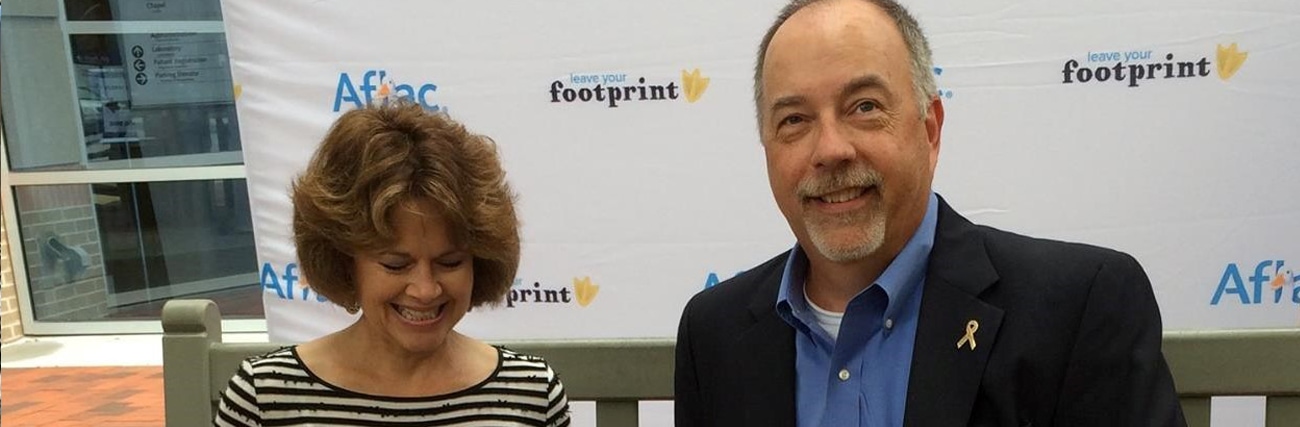
As Kevin prepares to rotate off the board, he reflects on his service, “I have loved my time on the board. Besides the rewarding work, over the years I have had the opportunity to meet many interesting and influential individuals and have made great friendships,” Kevin shared. “I’ve never been star-struck in my life, not until I had the opportunity to meet the Aflac Duck at CHOA!”

As he looks to the future, Kevin sees elevating the CURE message above other well-deserving charities and donor retention as two of the biggest challenges. He also views millennials and other non-conventional givers as a huge opportunity.

“No one will question what we are doing,” Kevin insisted. “Our cause is just and our organization is sound. We just have to be persistent and keep telling the story. I will miss being involved with the day to day workings of CURE.”

We will miss you too, Kevin.


Getting Jaden Back in the Game

Like many people in the south, Jaden and his entire family suffer from seasonal allergies. An early pollen season in 2017 aggravated his allergies, so his mother, Vicki, got Jaden some over the counter medication to help. The medication soothed Jaden’s cough for a period of time, but after a few days, it came back with a vengeance. Vicki took Jaden to his pediatrician’s after-hours clinic where the doctor gave him a breathing treatment because he had so little air movement in his left lung. When that didn’t help, the doctor sent him to the emergency room for an x-ray to check for pneumonia or a blood clot.

“Jaden was moved to the Pediatric Intensive Care Unit after his x-ray and CT scan,” Vicki recalled. “They wouldn’t tell me what was wrong, only that he was a very sick boy.”

After a long, frustrating wait, the doctor finally told Vicki that Jaden had leukemia.  The doctor would have to operate immediately to insert a chest tube into Jaden’s lung and take a biopsy to determine the specific type of leukemia.

This was not Jaden’s first run-in with cancer. A friend in pre-k named Evan had Acute Myeloid Leukemia and tragically, died after a year of treatment. Since that time, Jaden and his family have been fundraising and started Childhood Cancer Awareness Month Gold-Out games at the high school where Jaden’s brother played football. When he heard he had cancer, Jaden began to mentally process what that might mean.

“Dr. Johnson was great about it,” said Vicki. “He talked to Jaden on his level and explained that leukemias can be very different – that it wasn’t even apples and oranges, it was more like apples and watermelons. He really helped Jaden understand that his cancer and Evan’s were different. That calmed Jaden down.”

Jaden began chemo the same day as his surgery. The mass was so large that it had collapsed his lung. Fortunately, the chest tube gave him immediate relief and his breathing improved.

After a year of treatment, Jaden has two years left to go. His latest bone marrow scan revealed that he has less than .01% leukemia cells in his marrow. He will continue treatment until there is absolutely no trace of leukemia.

Right now, he is on the sidelines, but Jaden is looking forward to playing basketball and football again.

“Cancer has changed him,” Vicki said. “He has always been reserved, and the cancer drove him to be even quieter. He is finally starting to come back out of his shell, and he has decided that he wants to use his story to make a difference.”

Jaden and his family participated in CURE’s Kids Conquer Cancer One Day at a Time last year during National Childhood Cancer Awareness Month, sharing his story and raising money to fight back.  Jaden also helped with a Gold Out game at Richmond Hill High School and led the team onto the field.

“Cancer can hit anyone, so we feel that it is important for us to do our part to find a cure,” Vicki insisted. “Like I always say: I wasn’t a cancer mom until the day I was one.”


Participation in CURE’s Kids Conquer Cancer One Day at a Time is a great way to share your child’s cancer story with the community and join us in fighting childhood cancer. For more information about this wonderful program, please contact Lisa Branch at [email protected].


Life in the Key of Astonishing

Life in the Key of Astonishing

It is quite an honor for a student to be accepted into the Governor’s Honors Program (or GHP) in Georgia. The GHP is a four-week, summer educational program designed for intellectually gifted and artistically talented high school students. Rising juniors and seniors are nominated by their teachers and are screened through a rigorous round of essays, auditions, and interviews. The overall acceptance rate of the program is around 3%.

Those who know Loren Bass-Sanford and have heard her play probably were not surprised when they learned of her acceptance into the GHP as a jazz pianist. What might surprise them are the obstacles she overcame to get to there.

A persistent cough and what seemed to be regular cold symptoms escalated until she stopped walking and talking. Just before her third birthday, she became so weak that she could only lay in bed staring blankly at the ceiling. Her mother’s intuition drove them to the hospital where Loren needed a blood transfusion to make it through the night and was soon diagnosed with leukemia.

“I have some vivid memories of life during treatment,” Loren said. “Once when I was in pre-k, one of my little friends asked me about the bump in my chest. I tried to explain about the port, but I’m sure she didn’t understand.”

The standard treatment for pediatric leukemia lasts between two and three years for most children. Loren was cancer-free and considered a survivor at five. When she was ten, a long, six-hour appointment marked the end of her five-year remission period. She will continue to go to survivor’s visits every year until she reaches the age of 21.

One of the chemotherapies administered to Loren during her treatment was vincristine, which can cause numbness, tingling, and fine motor skill issues in the hands and feet. Sometimes, these side effects occur during treatment and sometimes they appear long treatment is complete. When Loren began experiencing such issues in her hands, she turned to the piano as a form of therapy. Her aptitude quickly revealed itself and the level at which she can now play is truly astonishing when the side effects she deals with are taken into consideration!

Loren is often complimented on her talent. Humbly she replied, “I just love playing piano. It was an honor to be at GHP; I learned so much.”

This rising senior at Lovett School doesn’t take her health for granted. She is on the Student Service Board and has joined the fight against childhood cancer. Last year, she led an effort for the Leukemia & Lymphoma Society’s Students of the Year project. This year, she is leading Lovett’s Gold Out game during September’s Childhood Cancer Awareness Month.

“Lovett has a long history of partnering with CURE in fight against childhood cancer and it is incredibly special to have a childhood cancer survivor lead the charge this year,” said CURE’s Executive Director, Kristin Connor.


In addition to the Lovett School, many high schools are holding Gold Out games in September.  If you’d like to host a gold out game at your school, visit www.gogold4CURE.com where you can download everything you need to plan your event.  If you have any questions, please contact Mark Myers at [email protected].

Cap & Gown… and Cancer

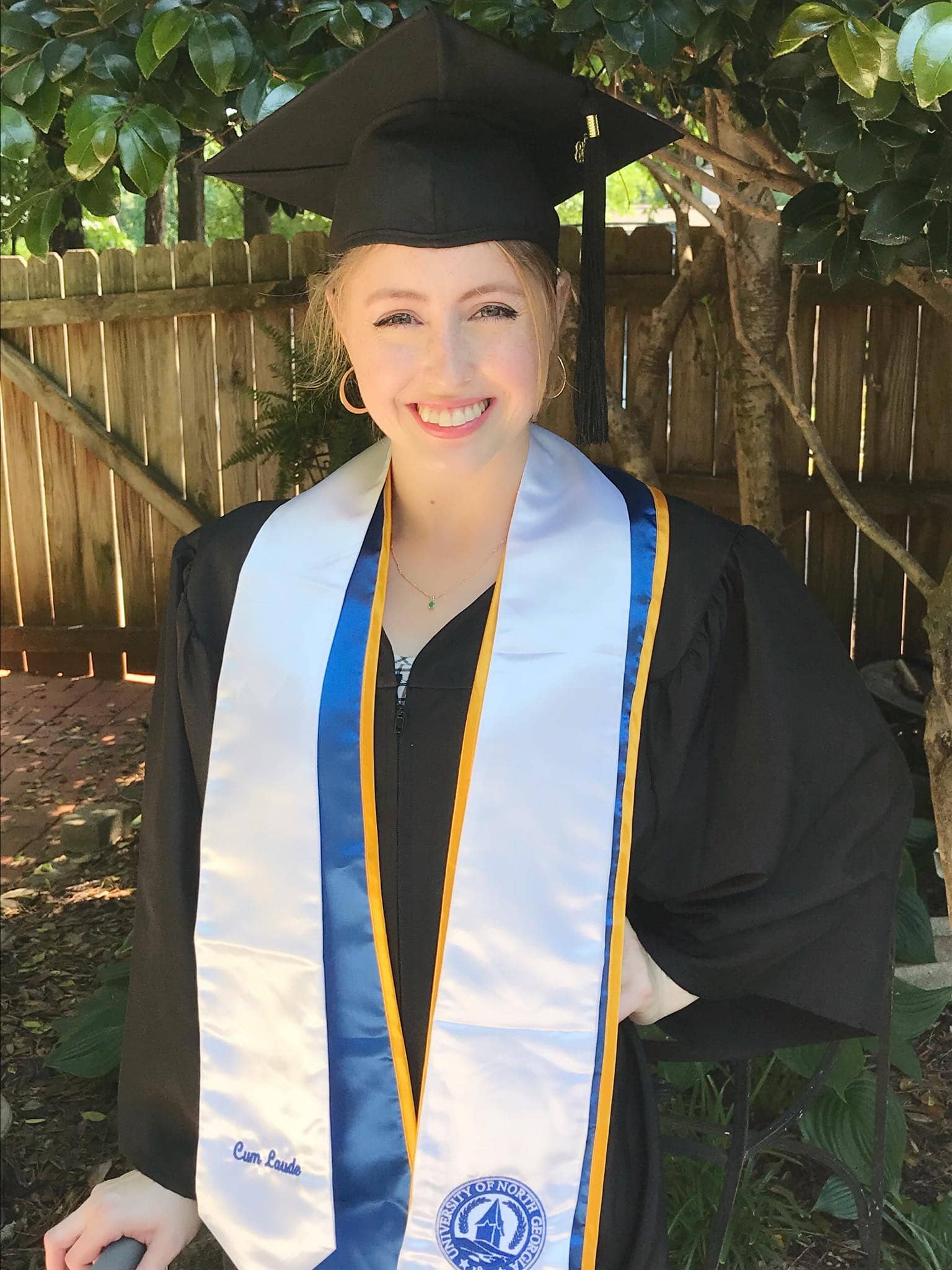
Last weekend, Kennedy Cobble walked the aisle beside 2000 other graduates at the University of North Georgia. While many were watching, few in the audience truly understood how many steps it took her to get there. When she was in the eighth grade, Kennedy was diagnosed with Osteosarcoma – an aggressive bone cancer. Over the next four years, she would beat cancer not just once, but four times: once in her sacrum, twice in her lungs, and once in her tibia.

“The hardest part was for me was that I had to watch my friends move on while I took a year off because of treatments,” Kennedy said. “Falling behind is hard for a girl in high school.”

After finally achieving remission, Kennedy graduated high school in 2011 and then took more time off. It wasn’t the average gap year. Kennedy would need three years to fully recover – not from cancer, but from the years of harsh chemotherapy that wreaked havoc on her body.

“When I finished fighting the cancer, I had to fight the side effects from the treatment. Doctors replaced my sacrum, the lower half of my spine, and part of my pelvis,” she detailed. “I had to have a knee replacement, a metal rod in my tibia, and my femur was so brittle it needed a metal plate to reinforce it. But I’m here!”

She was strong enough to resume school in 2014 and now she is a college graduate! Her degree is in early childhood education and she hopes to land a teaching job soon. With all she’s been through, Kennedy will be a wonderful example of strength, patience, and perseverance to a lucky classroom of students.

When Andrew DuBois lines up with his fellow graduates to accept his diploma from The Walker School’s principal, he likely won’t be the tallest of the group. But he doesn’t mind that at all. Andrew is pointed toward a promising future and a little thing like height won’t bring him down.

While the other boys in middle school were hitting puberty and growing, Andrew noticed he was not. Initially doctors told him to be patient. But after a long period with no change, an MRI revealed a tumor pressing on his pituitary gland which caused a deficiency in growth hormones. The tumor was not spreading but the location meant it wasn’t a candidate for surgery or radiation. His treatment began with a hormone supplement to try to bring on puberty, but that made the tumor grow. So Andrew started a regimen of chemotherapy.

The first chemo was very harsh and ineffective. It caused him all kinds of problems including neuropathy in his fingers. After discontinuing that drug, he began taking biweekly doses of another chemo called Avastin which effectively shrunk the tumor. That became his routine through the rest of high school – trips to get chemo every other week.

“I had a pretty good attitude, but I’d be lying if I said I kept positive the whole time,” Andrew said. “The early teenage years were tough. I had played baseball all my life and had to give it up because the other guys grew bigger and stronger and I didn’t. But I began to focus on music and loved being a part of the band and drumline. I finally decided that I wasn’t going to let my height bring me down!”

In the fall, Andrew will be attending Georgia College & State University in Milledgeville where he will major in nursing.

“I spent five years watching what nurses do,” Andrew shared. “I have seen how important they are to the healing process and I think I will be able to relate to patients in a special way with all I’ve been through.”

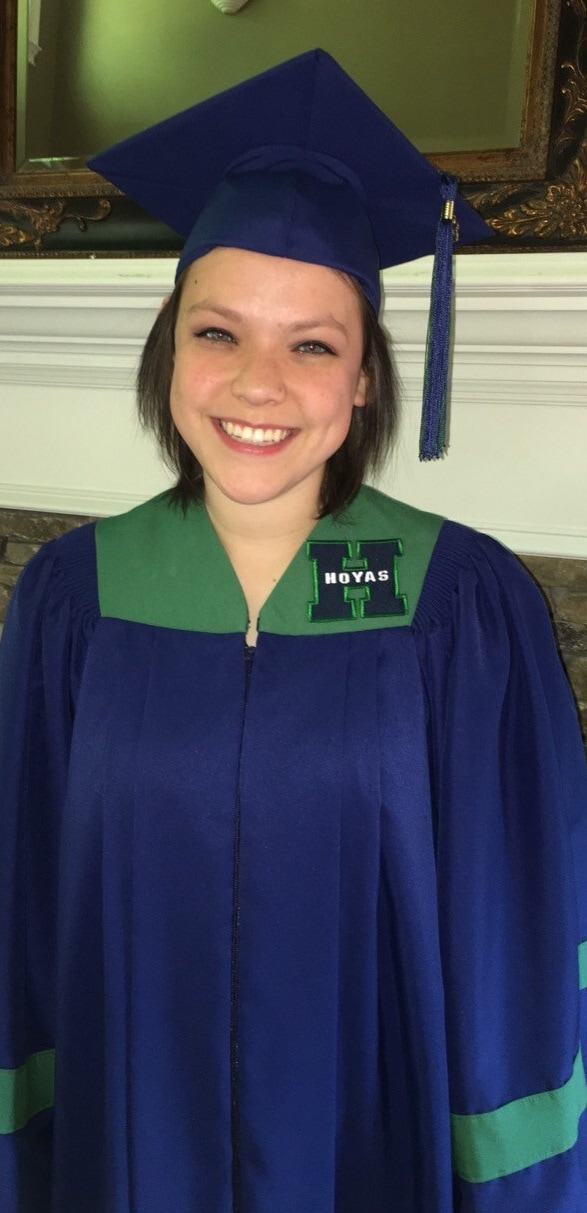
Maddie Harris uses the line, “The tassel was worth the hassle.” And for her, high school started as a huge hassle. On the day after Thanksgiving during her eighth-grade year, Maddie noticed an odd bruise on her lower leg. It continued to get worse until just days later she couldn’t walk on it. X-rays led to an MRI which revealed a tumor and on December 6th, Maddie was diagnosed with Ewing’s sarcoma.

She had a port placed and began the standard mix of chemotherapy. One of the drugs she had to endure was Doxorubicin – otherwise known as “the red devil.” Maddie had a severe reaction to this drug. Her feet blistered all over and she couldn’t walk on them. This side effect abated and she went on with treatment. Although it was hard on her, Maddie was more concerned with others.

“The toughest part for me was trying to keep my friends calm and reassuring them that I was going to be okay, even when I felt terrible,” Maddie recalled. “They acted scared around me and I wanted them to know that even though I was sick and bald, I was still Maddie.”

Maddie’s treatment would last until the middle of her freshman year at Harrison High School. She didn’t get to go to school until the fourth day and by that time, all of her classmates knew their way around and she kept getting lost in the hallways. But the school and her teachers were very supportive. Some even came to her home to help with lessons.

That was three years ago. Maddie just took her last final and will start her freshman year at Georgia College & State University in the fall – where she plans to arrive on time! She isn’t completely decided on her major, but wants to work with children and is considerting therapy or counseling – which is no surprise considering her life experience and compassion for others.

A Whole Bunch of E’s

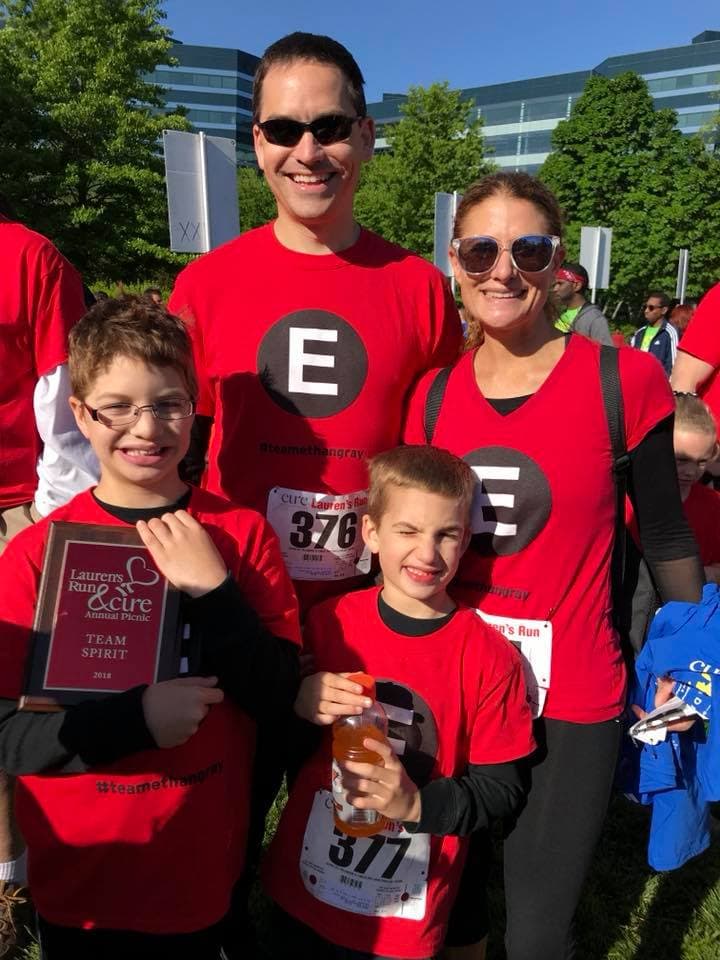
the Ethan Lassiter family each wearing a red shirt with a big "E" on the front

If you attended Lauren’s Run and the CURE Childhood Cancer Annual Picnic, you saw people in bright red shirts marked with a big “E”. In fact, you could hardly keep from stumbling into them because they were everywhere!

The E stands for Ethan, and his team is called Team Ethan Gray. Ethan was a very healthy child until his parents noticed something odd. Just before his eighth birthday, he began showing the characteristic signs of puberty.

“We have a picture of him swimming, and he looked perfectly normal,” relayed his mother, Carrie. “Then just six weeks later, he started sprouting hair, developed body odor, and became hormonal. One afternoon he got frustrated with something and burst out in tears, which absolutely isn’t like him.”

His pediatrician agreed that there was a problem and sent them for further testing that revealed a low-grade glioma brain tumor, located from his optic nerve pathway and growing onto his hypothalamus. The hypothalamus is located deep in the base of the brain, and it is interconnected with many parts of the central nervous system. Its location makes Ethan’s tumor inoperable and because it was pressing on the hypothalamus, it activated early puberty (a.k.a. precocious puberty.)

Ethan has been receiving weekly chemotherapy treatments since November and will continue to receive treatment until February 2019. Initially the chemo was very hard on him. He was incredibly nauseous, and nine weeks into treatment, he had a terrible allergic reaction which caused doctors to switch chemo. His body is handling this new chemotherapy much better. The good news is that Ethan’s latest MRI revealed no new growth in his tumor. Hopefully the tumor will now begin to shrink.

Team Ethan Gray is certainly pulling for him. His team began to form early in his treatment. Ethan has always been a helpful boy. During his initial hospital stay, he and his family saw the great needs of other families in treatment. Together they decided to start the Team Ethan Gray t-shirt campaign and began selling them online. All of the donations received benefit the Patient Emergency Relief Fund at Children’s Healthcare of Atlanta. Thus far, shirt sales have raised close to $10,000!

They also help Ethan. When friends, family, and even strangers wear the shirts and post a picture he can see, it lets Ethan know that people are on his team.

“Ethan is a strong kiddo,” said Carrie. “He has had a very positive outlook. Of course, he has bad days, and on those days, the shirts help to lift his spirits.”

The shirts also came out en masse at the 2018 Lauren’s Run, where the team boasted a whopping sixty members. They weren’t a quiet faction either. Team Ethan Gray had a blast and walked away with the Team Spirit Award. They also raised more than $7000 to further CURE’s mission.

“We adore CURE,” Carrie exclaimed. “We love seeing you and your volunteers in the hospital every time we are there. Ethan wasn’t in a great place at first. He was having trouble accepting what was happening until he met a little girl at a CURE event. That encounter with another patient helped him see that he had to fight. It was a real turning point.”

Ethan loved Lauren’s Run, too. He wanted to walk the 5k, but after about 2 ½ miles, he started hurting from the chemo. One of the side effects of his treatment involves his nervous system. His feet started tingling and hurting which made him stop for a few minutes. But he was determined to finish – and he did!

“He really enjoyed the carnival games, inflatables, and the game truck,” Carrie recalled. “Of course, he thought it was really cool to see all of his red shirts out there, too.”

Ethan has big plans for the future. He wants to start a “Kid Clean-up Club” that will empower kids to help clean up garbage and plastic from parks, roads, and oceans. With the army of supporters he’s already built, don’t be surprised if you see Team Ethan Gray in red shirts cleaning the side of the road near you.


the Ethan Lassiter family each wearing a red shirt with a big "E" on the front

Lauren’s Run Parking Directions

Parking Information & Directions

The 5K race begins at 8:00 am and the 2K race begins at 9:45 am.

Westbound on I-285 from I-85

Take I-285 North/West to Exit 28 (Peachtree-Dunwoody Road) and turn right. Proceed to the first traffic light and turn left onto Concourse Parkway into the Concourse Office Park. Follow parking directional signs to parking decks #1 and #4.

Southbound on GA 400

Take GA 400 South and exit at Hammond Drive. Turn left off the exit ramp onto Hammond Drive. Go to 2nd traffic light and turn right on Concourse Parkway into Concourse Office Park (adjacent to KinderCare). Follow parking directional signs to parking decks #4, #5 & #6.

Northbound on GA 400

Take GA-400 North to the Glenridge Connector (Exit 4A). Turn right at the end of the ramp onto Glenridge Connector. Proceed to the second traffic light, and turn left onto Peachtree-Dunwoody Road. Proceed north on Peachtree Dunwoody Road to the 2nd traffic light after going under I-285 bridge. Turn left on Concourse Parkway into Concourse Office Park. Follow the parking directional signs to parking decks #1 and #4.

Eastbound on I-285 from I-75

Take I-285 North/East to Exit 26 (Glenridge Drive). Turn left at the end of the ramp onto Glenridge Drive. Proceed to the 4th traffic light and turn right on Hammond Drive. Continue to the 4th traffic light and turn right on Concourse Parkway into Concourse Office Park (adjacent to KinderCare). Follow parking directional signs to parking decks #4, #5 & #6.

The Taste of Success

The Taste of Success

When CURE’s good friend and long-time partner, the St. Regis Atlanta, shared with us a concept for a new culinary event in Atlanta called Out of the Kitchen, we were immediately excited. The enthusiasm of General Manager, Guntram Merl, who had started Out of the Kitchen charity events at other properties he has managed, was contagious.

“Honestly, the over-the-top, elaborate idea was unlike anything offered in Atlanta,” recalled Lauren Sims, CURE’s Director of Development. “I thought Guntram had an incredible concept, and we were thrilled to be chosen as the charity partner. During the planning of the event ,we watched in amazement as the best chefs in the city jumped right in.”

The inaugural event took place on November 16, 2017. The beautiful St. Regis ballroom was transformed into sixteen intimate tables with seats surrounding a food preparation area. Each table had its own chef who created a unique menu just for the event. During the night, these chefs prepared food in front of the guests, talked and laughed with them, explained techniques, and shared culinary secrets. To walk the floor was to stroll from country to country as the smells of cuisine from Italy, France, Greece, Thailand, and many others wafted in the aisles.

And if the smells and tastes weren’t enough, after the dinner a spontaneous auction erupted. Local foodie legend, Steak Shapiro served as the master of ceremonies as the chefs offered extraordinary, personal culinary experiences for the top bidders. The room roared with laughter when Chef Kevin Rathbun took over the host duties and handled the microphone nearly as well as he handles a knife. Every guest raved about the evening, and CURE was thrilled to be a part of it. All told, the night raised $225,000 and left our hearts as full as our stomachs.

“The incredible generosity of time and passion from our Atlanta Chef’s community makes an event like Out of the Kitchen possible,” said Guntram. “Partner this with the truly amazing organization that CURE is… what a ‘recipe’ for a truly remarkable evening. The St Regis Atlanta is so grateful for being able to bring this to our community and we hope that this will become the marque culinary event for years to come.”

Thank you to the St. Regis Atlanta, Steak Shapiro, and all of the incredible chefs who donated their time and talent to benefit our mission to find a cure for childhood cancer. Out of the Kitchen 2018 will take place November 15. After the success of the inaugural event, we know it won’t take four weeks to sell out this time.


Acquiring Targets in the Fight Against AML

UR

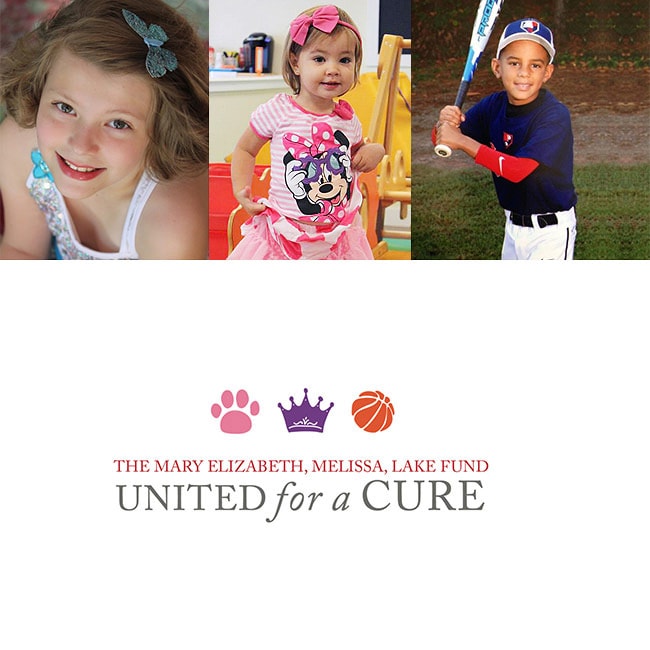
A childhood cancer diagnosis can turn complete strangers into intimate friends very quickly. Because each type of cancer is unique, parents tend to fragment by diagnosis to share knowledge, side-effect remedies, and treatment options. Three Atlanta families met that way; while their children were all fighting Acute Myeloid Leukemia (AML). Those beautiful children – Lake, Mary Elizabeth, and Melissa – fought bravely but ultimately succumbed to the disease. The bonds built by their families during treatment didn’t break after their deaths. They strengthened.

Together they formed a Named Fund at CURE called United for a CURE. They decided to work together in honor of their children with a vow to never stop fighting until there is a cure for children battling AML. Since then, they’ve worked tirelessly, and thanks to the support of friends, family, and colleagues they have raised over $350,000 in just two years. With that sum, they chose to support a project called Target Pediatric AML.

“We chose Target Pediatric AML because leading researchers agree that this project has the highest potential for a cure in the next five years,” said Joe Depa, Melissa’s father. “All children fighting AML have their tumor samples banked, and when we spoke with the project’s lead researcher, Dr. Soheil Meshinchi, he become emotional as he connected the samples he was studying with our families and our children. We could feel his passion immediately.”

Target Pediatric AML aims to facilitate genomic sequencing for every child fighting AML, searching for unique identifiers and vulnerabilities of the disease in young patients. Once these factors are identified, the hope is that the information will allow existing agents to be delivered in the right combination to effectively treat children fighting the disease. This knowledge will enable expansion of the treatment toolkit and jumpstart more informed, individualized therapy.

The project has already had some key wins:

  • The project has created the world’s largest database of genetic data for pediatric cancer patients. The team has provided genetic sequencing (mRNA) for more than 1200 AML patients.
  • A new therapeutic target has been identified and funding has been secured for clinical trial. Mesothelin was identified as a therapeutic target in AML. Typically found in lung cancer patients, genetic profiling revealed this protein in AML patients, as well. Bayer Pharmaceuticals has an anti-mesothelin drug for lung cancer and has agreed to participate in a clinical trial in 2018 to test its effectiveness against pediatric AML.
  • Additional targets are under development. Based on the RNA sequencing, over 100 potential targets have been identified and are undergoing verification for therapeutic development.
  • The information and database is shared publicly. All health institutions, pharmaceutical companies, and researchers can access and leverage the genetic data acquired with the hopes that collaboration will lead to provide more targeted therapies.

The underlying fact is that all children are unique and their cancers are also very different. If we can find common targets in the genomic make-up of AML, we might be able to fight these targets with existing therapies or therapy combinations.

“There are many different subtypes of AML,” explained Joe. “In fact, each of our three children had a completely different type. And yet, today’s treatments are basically the same for every subtype. This project is searching for individual therapies for every child to improve their survival rate. It’s too late for Lake, Mary Elizabeth, and Melissa. But we hope someday their names are attached to a cure for AML so that other families win their fight. We owe them that much.”

To learn more about the United for a CURE Fund, please click here:

A Survivor’s To-Do List

A Childhood Cancer Survivor’s To-Do List


It is important that childhood cancer survivors focus on staying healthy after cancer. Here are some helpful tips to consider:

  1. Make your appointment to visit a cancer survivor clinic. Survivor visits begin when you are two years past the completion of cancer treatments. If you have reached this milestone, talk to your oncologist about a referral to your hospital’s survivor program. In the cancer survivor clinic, you will be educated about your risk for any late effects which might be side effects from your cancer treatment. You will also be checked for those side effects through labs or screening tests. You may see an oncologist, an endocrinologist, a pediatric psychologist, and a social worker. The number of providers you see is based on your health needs. If you already attend survivor clinic, be sure to make your appointment for 2018.
  2.  Find and review your survivor healthcare plan. If you have already been to survivor clinic, review the survivor healthcare plan you received in clinic. The survivor healthcare plan will outline the cancer treatments you received, the late affects you are at risk to develop, and how the survivor team plans to check you for any late effects. If you have any questions about what you find in your survivor healthcare plan, jot them down and bring them to clinic with you. If you have been treated in Atlanta and can’t find your survivor healthcare plan, check Cancer Survivor Link online! When you register for Survivor Link at cancersurvivorlink.org, each year when you come to the survivor clinic, the team will upload the newest version of your survivor healthcare plan to your electronic record.
  3. Learn a new self-management health skill. If you are an adolescent or young adult, work on a new survivor skill. A parent of a younger survivor could help him or her choose and develop a skill. This could be the survivor calling to make the clinic appointment, making the co-pay at the time of the appointment, or downloading the survivor healthcare plan from SurvivorLink. You may choose to know the names and doses of your medications or call in the refills this year. There are many skills that need to be learned, but if you learn them one at a time you will have them all down in no time.
  4. Be sure to keep seeing your primary care provider for normal child and adolescent medical care and visit your dentist twice a year. Sometimes there are so many specialty doctor’s visits, it is hard to fit in the “normal” visits, but they are important too. You want to keep your primary care physician up-to-date on your health so he or she can take care of your routine medical needs. Also, don’t forget to get your teeth cleaned and eyes checked.

There are several skills a young survivor needs to learn to maintain health. By working to master one or more of these skills in the coming year, you will be setting yourself on the right path to a healthy life after cancer.


Driving as Long as it Takes

Driving as Long as it Takes


“Nothing’s been normal with Evan,” his father, Kraig, said. “Not in his whole life.”

Evan’s whole life consists of almost three years, and his abnormal childhood began in the womb. Kraig and his wife, Brittany, live in Leary, a tiny town in the southwest corner of Georgia. Doctors discovered a heart defect during a routine ultrasound while Brittany was pregnant. Knowing he would need open-heart surgery at birth, doctors induced labor as early as was safe.

Kraig said it was very stressful knowing their baby was going to need open-heart surgery as soon as he was born. His mind drifted toward the worst possible outcomes, and he worried about both his son and his wife. The surgery was a success, but complications forced more heart procedures over the next few months. Doctors also found a problem called hydronephrosis that resulted in an oversized kidney, possibly due to blockage. That became the next issue facing Evan’s medical team.

To fight these problems, the family had to make many trips to Atlanta where specialists were prepared to help. Depending on the traffic, that trip took roughly four hours each way. And the surgeries weren’t the only thing that forced them on the road. Because of his frail condition, normal childhood illnesses were harder on Evan than the average child.

Still, they rode out the surgeries and illness through his first year of life and felt like they were on the road to recovery. At sixteen months old, Evan was cleared by cardiologists and shortly thereafter had a scan to make sure the hydronephrosis was gone. The scan revealed a mass on his kidney. After surgery to remove it, Evan’s parents were introduced to a new team of doctors: pediatric oncologists. The tumor was neuroblastoma – a childhood cancer that can form anywhere in the nervous system.

The successful tumor removal put Evan into remission, but he quickly relapsed. Since then, he has had multiple rounds of chemotherapy, two bone marrow transplants, and antibody treatment. All of this treatment occurred in Atlanta. In fact, Kraig estimates the family has driven that well-worn path over one hundred times in the last three years. How has Evan taken it?

“Right now, you wouldn’t know he has health problems if you didn’t see the scars,” Kraig shared. “He loves to be outside and sit in my lap for a ride around the fields.”

Of course, it would be hard to miss his scars. By Kraig’s count, Evan has around ten of them on his tiny body: two from open-heart surgeries, two from the tumor removal, and six from chest tubes he has had over the years. He also has a gastric feeding tube that has been crucial for nourishment.

Evan is currently receiving antibody treatment, a type of immunotherapy where agents designed to attack cancer cells are introduced into the body. This targeted therapy seeks to kill the cancer without damaging healthy cells. CURE has invested heavily in such innovative research with the hopes of speeding it to the bedside of children who need it – children like Evan.

During Evan’s battles, Kraig has felt overwhelming support from their community and his employer, the Coastal Plywood Company. But he is quick to point out the most important member of his team.

“If it wasn’t for Brittany, I don’t know where we would be,” he said. “She keeps up with all of Evan’s appointments and medications and makes sure he gets everything he needs. We’d be lost without her.”

Doctor’s estimate Evan has six months left in treatment before he can put cancer in the rear-view mirror. Kraig said he will keep driving as long as it takes to give Evan a normal life.

“I don’t want much,” he explained. “I just want us to be a family again.”