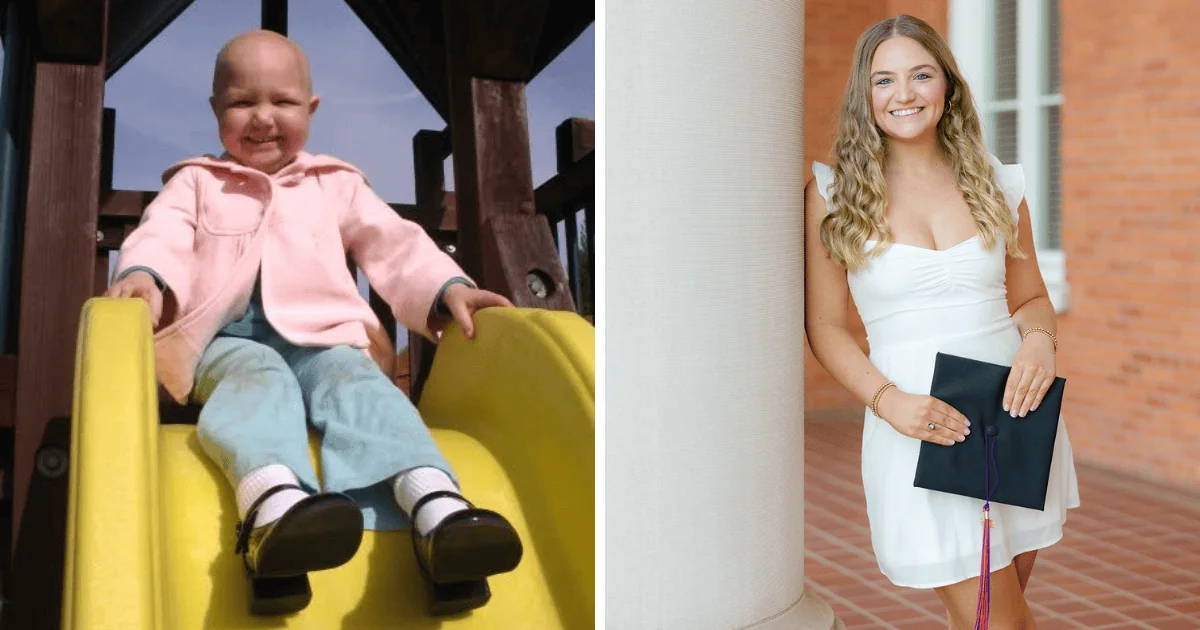
When Ava Wenclawiak was four years old, the hospital became her second home during leukemia treatment. Now, at 22, she’s walking back through those same doors. But this time, she’s wearing scrubs instead of a hospital gown.
Ava just graduated from Clemson University with her nursing degree and began her career as a pediatric hematology/oncology nurse at the very hospital that saved her life. It’s a full-circle moment that represents more than just a job; it’s a calling born from experience.
“I’m honored to work at the hospital that gave me a second chance at life,” Ava shared. “I want to be able to take care of patients and families and provide them with the amazing nurse care I once received.”
Ava embodies what we hope for every child we serve – not just survival, but the chance to thrive, to find purpose, and to turn their experience into something that helps others.
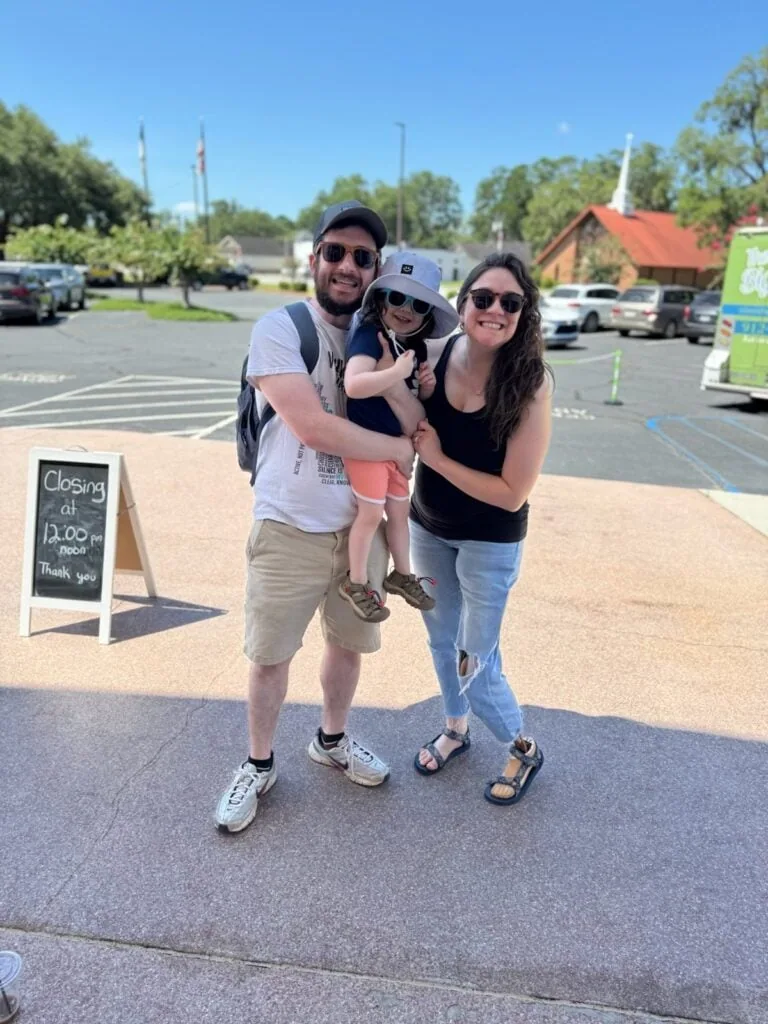
Ten years ago, Lexi Sklar’s life took an unexpected turn. At just 21 years old, in the prime of spreading her independent wings, she received a diagnosis that would temporarily clip them. What began as what seemed like a gym injury revealed itself as something far more serious, a tumor called osteosarcoma.
“As a young adult, you think you have your entire life ahead of you,” Lexi reflected. “But then you get served this stark reality that you might not be here tomorrow. What am I going to do with all of the other things I planned to do with my life?”
Among those plans was starting a family. The tumor was so aggressive that she began chemotherapy immediately. There was no time for any fertility treatment. The possibility of motherhood seemed to slip away along with so many other dreams.
But today, Lexi’s 2 ½-year-old daughter Charlotte runs around with unbridled energy, while Lexi nurtures her second pregnancy – a reality she once couldn’t imagine possible.
“Both of my pregnancies are absolute miracles,” she says with quiet wonder.
Her journey included a rotationplasty, a procedure in which the knee is amputated, and the foot and ankle are rotated 180 degrees and attached to the thigh bone, effectively creating a new functional knee. While she muses that it is not “aesthetically the prettiest thing in the world,” it gave her something beautiful: freedom of movement without the limitations of a traditional amputation.
“I love it,” she stated firmly about her surgical choice. “It allows me to be active.”
That activity extended to wheelchair basketball, which she’s played for three seasons, and walking confidently across the college graduation stage in 2016 – a goal she set during her darkest days of treatment. Through it all, one constant presence remained: her mother, Heather, herself a cancer survivor.
“The role that my mom took during my treatment – I don’t think that there are enough thank yous in the world for how much of her life she gave up to be there for me,” Lexi shares. “Making sure someone was in my corner all the time.”
Her mother’s guidance came with a profound promise: “There are things that I experienced in my cancer journey that I can help you with. But there are things that we will have to push through together.”
It’s no wonder that “hope” became Lexi’s favorite word during treatment, so much so that she named her dog after it.
“When things are at their worst, there is always room for a little hope,” she said. “You can always look to hope for a light in dark times.”
A D-Day Veteran and His Great-Grandson Fight Unimaginable Battles
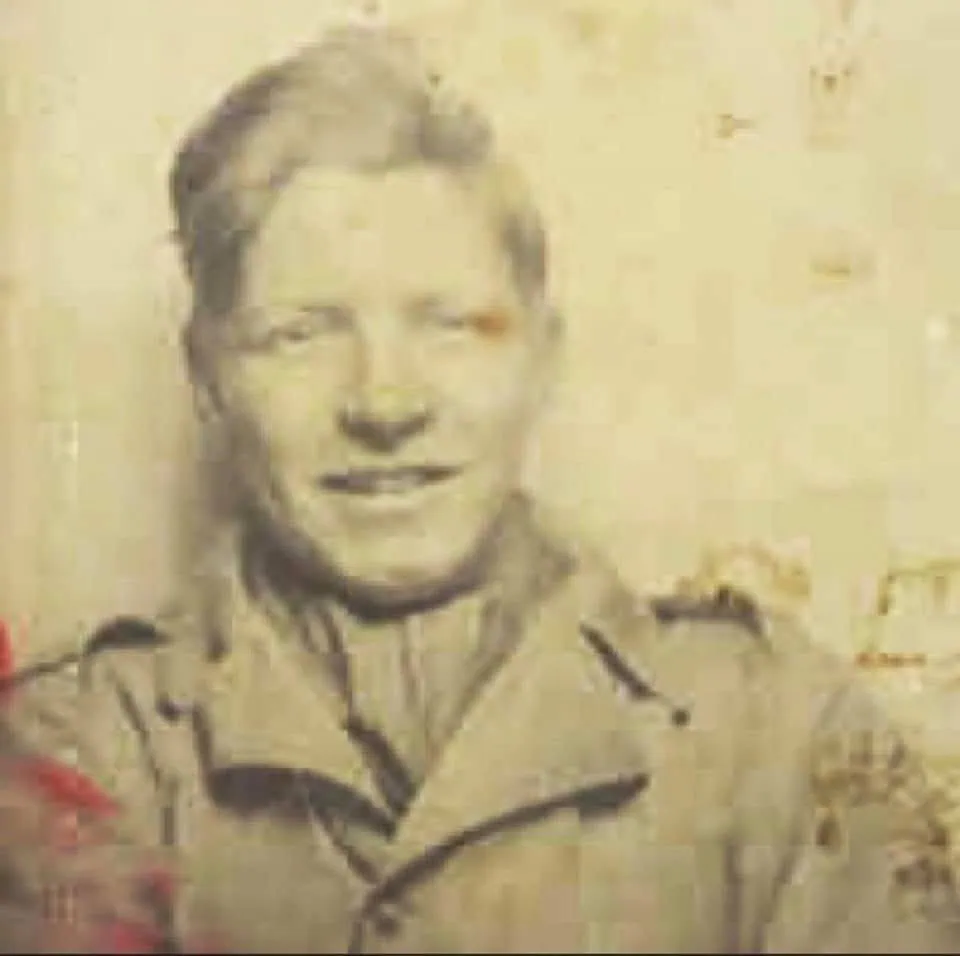
On June 6, 1944, 17-year-old Frank Webb Krueger landed on Omaha Beach in Normandy, France as one of 156,000 young men from the United States, Great Britain, and Canada. Their mission was simple – infiltrate Nazi-held France, and to liberate our allies from the invasion of enemy forces who threatened our freedom and way of life. The execution, however, was anything but. The weather was awful. The invasion had to be delayed. The Germans had a chance to mount defenses in preparation for our arrival. When they arrived on the shores of Normandy, they were met with heavy gunfire, barbed wire, and mines. It was an onslaught from every angle. And, on Omaha Beach, a literal uphill battle to climb the cliffs to claim the territory, and the eventual victory.
On February 17, 2022, Webb Murray Waddell arrived at the Children’s Hospital of Georgia in Augusta as the only child of Laura and Scott. We also had a simple mission – get an MRI to help uncover the reason for Webb’s recent development of nystagmus in his right eye – a condition that caused a side-to-side shaking of his pupil. The execution, like that of the D-Day invasion, was anything but simple. A scan that was scheduled to take 30 minutes took over an hour and a half. The discovery of a plum-sized tumor in Webb’s brain changed the course of action not just for the day, but for the rest of their lives. Webb and his family were suddenly met with their own uphill battle. This one wasn’t on a foreign battlefield, but right in their very home.
As a teacher, Laura knew she would struggle to name her children. She had her fair share of names she knew she would never use. Her husband, Scott, and she decided the best course of action was to use family names so that they had a positive and meaningful connection with whatever they decided. So, that’s exactly what they did.
Frank Webb Krueger, Laura’s maternal grandfather, the D-Day hero from the middle-of-nowhere Alabama, shares his name with his great-grandson, who is a hero in his own right. Little did Laura and Scott know by giving Webb his name that these two incredible people would share so much more than that.
Webb was diagnosed before he could crawl, before he could sit up, and before he could speak. He has battled his whole life. What started as difficulty and eventual inability to eat led to difficulty gaining weight, and the inability to meet developmental milestones. Finally, at seven months old, Laura and Scott knew the reason why.
When the MRI revealed Webb’s brain tumor, a plan was made to schedule surgery for the following Monday. The team wanted the most optimal conditions, to get the right personnel in place, and to plan it out perfectly. But, just like D-Day, that didn’t happen. Twenty-four hours after Webb’s MRI, he woke from a sound sleep with a guttural scream. He was having a stroke. Laura pressed the emergency call button as fast as she could find it, picked Webb up, and watched as half of his face and his body drooped. Nurses rushed into the room; Webb was intubated and rushed to the ICU in the wee hours of the morning.
Just like the D-Day invasion, a decision was made to move forward immediately. The conditions were no longer optimal, but the luxury of waiting no longer existed. This mission was a rescue one. A few hours later, just after daybreak, Webb was rushed into emergency brain surgery. Six very long hours passed, and the neurosurgeon emerged to speak with Laura and Scott.
“I got what I could, but it was very messy,” he said, referring to the surgical field. “There’s a chance he’s lost his eyesight. I just want you to prepare,” he said.
It took six days for the beach fronts of Normandy to connect, allowing a United Allied front to move inland through France. It took six weeks for Webb to be stable enough to move from the ICU up to the oncology floor. It also took six weeks for the pathology to come back with a diagnosis – a pilomyxoid astrocytoma. Grade 1. Treatable. There was now a course of action. That course included fourteen months of weekly chemotherapy infusions. As fate would have it, that last infusion was administered on June 6, 2023 – the 79th Anniversary of D-Day.
In spite of his constant adversity, Webb never lost his smile, or his hair! His contagious and infectious positivity quickly won over the hearts of every nurse and doctor who treated him. It is impossible not to love Webb. Unless you are intimately familiar with his journey, you would never know from just looking at him that he was in the fight of his life. This is just another trait he shares with his great-grandfather. The same man who fought and killed for his country was a humble, gentle, and unassuming father of five children.
This June, Webb turned four. He continues to get better every single day, and continues to amaze his family, teachers, doctors, and therapists with his strength and perseverance. Laura and Scott would have never chosen this path for him, or themselves, but feel so immensely blessed. Sometimes life is beautifully poetic, even in the worst of circumstances.
Madeline’s journey began with subtle signs that something was different. At two years old, her motor skills lagged behind her peers, and she seemed to fall more often than other children. Her mother, Bethany, recalled those early days, not realizing the challenges that lay ahead.
Just after Madeline’s third birthday, everything changed. Severe leg pain and her inability to walk prompted Bethany to insist on further testing. A total body scan revealed a football-sized mass in her abdomen, crushing her internal organs. The diagnosis was neuroblastoma, a type of pediatric cancer that forms in immature nerve cells.
After two rounds of chemotherapy, Madeline regained her ability to walk. Surgeons managed to remove 85% of the tumor, though its connection to her spinal column prevented complete removal. Genetic testing through CURE’s Precision Medicine Program revealed a mutation associated with an aggressive form of neuroblastoma. But fortunately, the remnants of Madeline’s tumor have been stable. Knowing that Madeline has that particular genetic mutation will help doctors in the future should her tumor become active.
Another aspect of precision medicine involves looking into a child’s genetic predisposition. Madeline’s younger sister, Sedona, has a genetic disorder called hemihypertrophy, which is a growth disorder. So she was referred to the genetic predisposition clinic to see if her genetic mutation was the same as Madeline’s. If a genetic link between the two was revealed, it might indicate that Sedona had a high risk of developing cancer in the future. No link was found, but both sisters will be continually monitored so that any cancer can be detected early when it is more treatable.
Madeline finished her treatment and was declared cancer-free. Five years later, she reached a big milestone – she was officially a cancer survivor. Now nine years old and soon to start the fourth grade, she continues to thrive despite some lingering side effects. Her gross motor skills are somewhat challenged, but she doesn’t mind that she can’t hula hoop as well as other kids in her class. She remains incredibly confident and understands that everyone has their own strengths.
Madeline’s battle inspired a profound transformation in her mother. Bethany, who had been working in tech at IBM, decided to pursue a completely different path. Her daughter’s treatment experience has shown her the incredible impact compassionate healthcare professionals can have on families facing their darkest moments.
In 2020, Bethany began taking nursing prerequisites part-time. By 2023, she enrolled full-time in an accelerated nursing program. Her new pursuit culminated in October when she started working in the Cardiac ICU at Children’s Healthcare of Atlanta – the very same hospital where Madeline had been treated. Her personal experience transformed her perspective, turning a potentially devastating chapter of her life into a calling to help others.
“I wanted to do something with my life that mattered,” Bethany explained. “I wanted to be there for someone else the way the medical team was there for my family.”
Madeline is known for her reading skills, empathy, and caring nature. And her mother is now working to ensure the health of other children. Together, they represent hope for their family and many others.
Caroline’s life took a dramatic turn just after her first birthday. At ten months old, she began losing weight and battling what seemed to be a stubborn ear infection. What her parents initially thought was a routine childhood illness led to an MRI that revealed a more serious condition: a tumor attached to her optic nerve. The diagnosis was juvenile pilocytic astrocytoma (JPA), typically one of the more treatable brain tumors with an excellent survival rate due to its rare tendency to spread.
However, Caroline’s case would prove anything but typical. After surgeons successfully removed half of the tumor, follow-up MRIs revealed the unthinkable – the cancer had spread, with new spots appearing on her brain and at the base of her spine. This put Caroline in the rare 2-3% of JPA cases that metastasize, leaving her medical team searching for answers.
Genetic sequencing through CURE’s Precision Medicine Program revealed crucial information: her tumor carried a gene fusion called KIAA1549: BRAF. This discovery proved to be both a challenge and an opportunity. While traditional treatments would likely be less effective because of this mutation, the discovery opened the door to targeted therapies called MEK inhibitors that could block the activity of proteins that cause tumor growth.
Caroline began immunotherapy and the genetic insight led her doctors to enroll her in a couple of clinical trials using these inhibitors. They finally began to see stable results with a better quality of life. After several years of hour-long infusions, followed by nausea, fatigue and hair thinning, Caroline was able to begin taking medication orally which mean fewer trips to the hospital.
In April 2023, Caroline had an emergency shunt placement to relieve the pressure caused by an excess of cerebral fluid. At that time, the surgeon took another tumor sample for additional gene sequencing. These results led them to a new clinical trial using a Type II pan-RAF kinase inhibitor that works by blocking a protein called Type II RAF kinase. After 6 months, the tumor mass showed a visible reduction, and two metastasized spots had nearly disappeared. Even more encouraging, her vision remained stable, a crucial concern given the tumor’s location near her optic nerve.
“We love to hear that the tumor is shrinking.” Said Caroline’s mother, Camille. “But we’ve been fighting so long that we’ve learned to appreciate and accept the word stable, too.”
When tumor growth was detected in July 2024, her doctors adjusted her treatment plan based on their understanding of her tumor’s genetic profile, leading to promising results.
Today, Caroline continues to navigate her treatment journey with resilience. She is eleven years old and has found joy in creative pursuits. She excels at diamond art, a hobby that involves applying tiny resin diamonds onto a canvas to create designs. Despite her visual challenges, Caroline shows remarkable precision in placing the diamonds. She has also taken to writing and is 50 pages into a new book.
Caroline’s case is unique and complex. Thanks to precision medicine, her treatment path continues to evolve, guided by the genetic insights that have proven so valuable. Her story demonstrates the vital role genetic testing plays in modern cancer treatment, allowing doctors to create personalized treatment plans that target specific mutations and allow children like Caroline to thrive.
At eleven years old, Terrance’s world turned upside down. What started as fatigue and mysterious lumps in his neck led to a diagnosis no family wants to hear: leukemia. The news sent him rushing to the emergency room, marking the beginning of a journey that would test his resilience but, in the end, reveal his extraordinary spirit.
Throughout his treatment, Terrance showed his determination. After each spinal tap, he’d ask to return to school, unwilling to let cancer define his childhood. The hospital staff became like family, making his stays as comfortable as possible, while organizations like CURE provided welcome distractions with toys and games in boredom buster bags and meals during treatment.
But it was dance that transformed Terrance’s journey. Days before his discharge, he discovered Dance for Your Life, a group that would shape his future. Even during treatment, he threw himself into hip-hop dance, finding freedom of expression in movement that cancer couldn’t constrain. At fourteen, Terrance finally rang the bell signaling the end of his treatment.
Today, Terrance’s life is full of milestones that once seemed distant. A 2023 graduate of Langston Hughes High School, he’s become a professional dancer and choreographer. He bought his first car on New Year’s Day, a symbol of his independence and bright future ahead.
Looking back, Terrance remains grateful for every prayer and gesture of support that carried him through. His journey from hospital beds to dance stages reminds us that with faith, family, and determination, extraordinary transformations are possible.
In late 2021, eight-year-old Rowan arrived at the emergency room weakened by weeks of unexplained illness. Due to Covid-related restrictions, his father and brother waited at home while his mother sat with him, unaware that their lives would change forever. After testing, doctors found a golf ball-sized tumor in Rowan’s cerebellum, blocking the natural flow of spinal fluid through his brain.
What followed was a whirlwind of surgeries, treatments, and countless hours in hospital rooms. Through six weeks of daily proton radiation therapy and nine cycles of chemotherapy, Rowan powered through every side effect. Even during his first chemo infusion, he sat calmly eating Doritos as if it were just another ordinary day. His younger brother stood by his side, ready to play whenever Rowan had the energy. They often played with Legos, which helped rebuild his fine motor skills.
Between treatments, Rowan looked for every opportunity for joy. He conquered a rock-climbing wall, soared through an aerial obstacle course, and proved his tenacity by completing the third grade on time despite spending much of the year in treatment. When his port was finally removed in November 2022, his family felt like a new chapter was beginning.
But in October 2023, a second tumor appeared – a high-grade glioma caused by his previous radiation treatment. This time, the treatment path was guided by genetic sequencing thanks to CURE’s investment in the Precision Medicine Program. Through this testing, doctors discovered that Rowan had Li Fraumeni Syndrome (LFS). Most people have a pair of proteins that keep cells from growing abnormally and becoming cancerous. Because of LFS, Rowan’s body doesn’t make enough of these proteins, and cells can divide uncontrolled and form tumors.
Without the genetic sequencing, Rowan would have undergone rounds of harsh infusion chemotherapy. Instead, armed with the knowledge of his LFS, doctors opted for a more targeted approach with oral chemotherapy that reduced his risk for additional tumors. The genetic testing also revealed that Rowan had inherited LFS from his mother, Charlan, leading to important, life-long, monitoring protocols for both of them.
Rowan & Jacob Today
Rowan is eleven years old and writing a new chapter of his story. He is in middle school, plays the trombone, and continues to choose joy every day. Regular MRIs every three months keep careful watch, allowing doctors to catch and treat any potential issues in the early, more treatable phase. Made possible by genetic sequencing, this proactive approach gives Rowan and his family the power of knowledge and early intervention.
“We won’t put their heads in the sand but rather face each day armed with understanding and hope.” his mother, Charlan, said. “For Rowan’s younger brother Jacob, genetic testing brought relief because it confirmed he doesn’t carry the LFS gene.”
Rowan’s story illustrates the power of precision medicine and genetic sequencing in childhood cancer care. It’s about a boy who loves his family and friends, being in school, and trying many kinds of games and activities – and how scientific advancement helps him continue doing all these things. Through genetic testing and a determination to find joy in every moment, Rowan and his family continue their journey – not just surviving but truly living.
Weighing in at 9 pounds, 10 ounces, Chrisean was big from the start. He had so many rolls that his family called him the “marshmallow baby.” As a child, he enjoyed dressing up in a suit and tie, especially to go to church. At the age of 13, he stood an imposing six feet tall and weighed 250 pounds. When he stopped eating, his mother, Machelle, knew something was wrong.
“He was complaining about body aches and pain everywhere,” Machelle said. “We went to the doctor several times and came home with different pain medicines. But no one could tell us what was wrong.”
One day, Chrisean called Machelle from school because his chest hurt badly. She took him to the children’s hospital, where the doctor pulled down his eyelid and noticed his skin was nearly white. When he ordered a blood test, the staff found a new problem – Chrisean was terrified of needles. He was so big that the nurses had to get two men and a security officer to hold him down to draw blood. The blood test revealed that Chrisean had acute lymphoblastic leukemia.
“When the doctor told us, I was confident that he would be alright,” Machelle said. “He had a game plan and said it was very treatable.”
During his hospital stays, Chrisean questioned everything. He researched every chemo he was to be given and asked questions of doctors, nurses, and anyone who provided care. A little more than a year into his three-year treatment, Chrisean developed a cough that turned into a fever. His breathing got progressively worse until his medical team decided he needed to be on a respirator. Things descended rapidly from that point. With his immune system depleted because of chemotherapy, Chrisean’s body was unable to fight off a virus.
“Chrisean called everyone in the family and asked them to come to the hospital,” Machelle said. “I think he understood that he was at the end. He got to say goodbye and tell us all he loved us before he passed.”
Chrisean passed on August 25, 2020.
“We met CURE in the hospital with meals, and CURE supported our family at Christmas,” Machelle shared. “But I didn’t know CURE would still be here for us after Chrisean died.”
Machelle has attended CURE’s Hope and Healing bereavement retreats and regularly enjoys gatherings with other bereaved mothers, as well as CURE’s Quiet Heroes luncheon.
“I just want to thank you. Hope and Healing has been a saving grace for me,” she said. “A lot of times, I didn’t want to exist in this world without my baby, and most people don’t know what it is like to lose a piece of your heart. It was a breath of fresh air being around other people who know this pain. I still need help and support, but I can help moms who are new to grief.”
Ally has been through a lot in her eleven years. When she was two years old, she fell off a stool while playing with her brother. A large bruise appeared on her stomach almost immediately, and her parents took her to their local hospital. After blood work, they learned that Ally had B-cell acute lymphoblastic leukemia. “We were told that within days, she would have had uncontrollable bleeding without treatment,” said Ally’s mother, Amber. “Her body was working so hard to fight the cancer that her heart would have given out. It is hard to be glad for your child to fall, but that fall saved her life.”
Ally received her first dose of chemotherapy within 16 hours of diagnosis. Over the two years of treatment that followed, Ally struggled with almost every possible side effect. She suffered three life-threatening infections, temporarily lost the ability to walk, and struggled to rebuild her immune system after every round of chemo.
“We were given a bleak prospect of survival during her second fight with an infection,” shared Amber. “We prayed for a miracle and finally got one when her body started to respond to antibiotics.”
Her treatment finally ended on August 24, 2018, but her battle was far from over because her immune system did not recover as expected. Even years later, her doctors were concerned because she was still living with depleted immune function. In 2022, they decided to do genetic sequencing on Ally and her family to see if a disorder was causing her immune system deficiency. What the sequencing uncovered has lifelong implications for Ally and her family.
“My nephew was diagnosed with leukemia after Ally,” said Amber. “So I expected that if there was an inherited genetic trait linked to her cancer or her body’s response to treatment, it would be on my side. We found out that the opposite was true.”
Ally shares a genetic condition called Lynch syndrome with her father, Justin. This condition increases the risk of many kinds of cancer, including colon cancer, endometrial cancer, and other types.Knowing this will allow Justin and Ally to be monitored for early signs of cancer, giving treatment a greater chance of success.Ally sees a doctor with expertise in genetic conditions every year, and her parents are updated on new testing and protocols. Ally is doing great today. She is in her first year of middle school and enjoys competing in pageants. Her parents are grateful for her health and credit CURE’s investment in precision medicine as a big part of it.
“I have a friend who just went through breast cancer treatment, and her genetic testing cost $4,000 out of pocket,” Amber said. “The cost of repeated gene sequencing for us would have been staggering. But it didn’t cost us a dime because of CURE’s funding. We wouldn’t have known about the syndrome without it. With this knowledge, we can be prepared and should be able to detect any cancer in Ally or Justin early.”
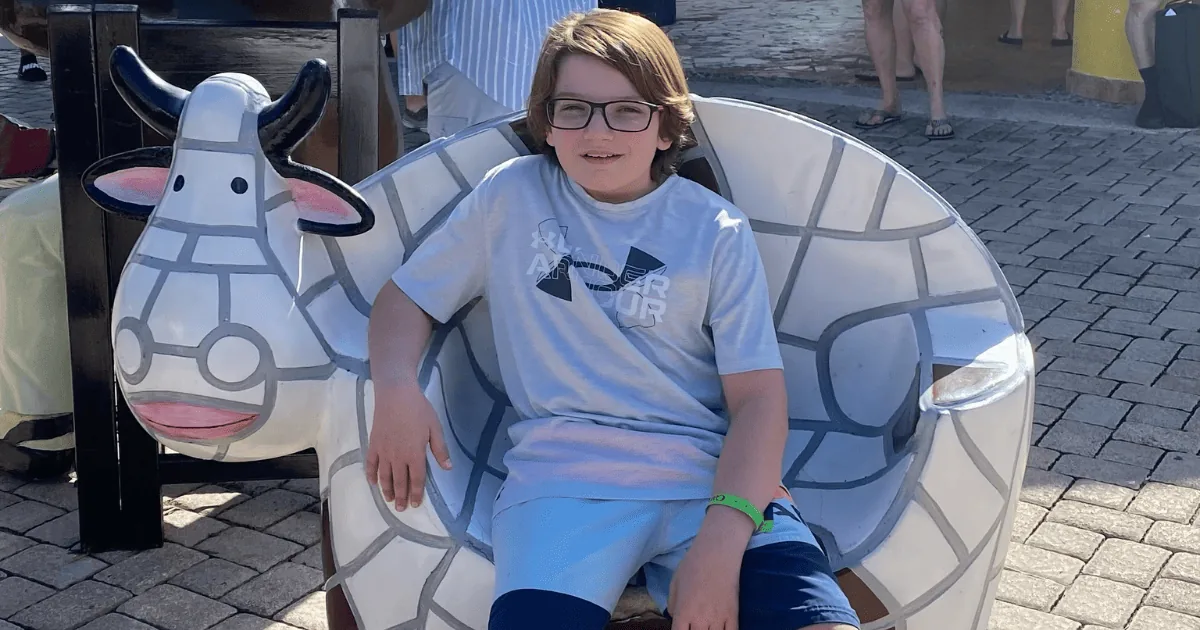
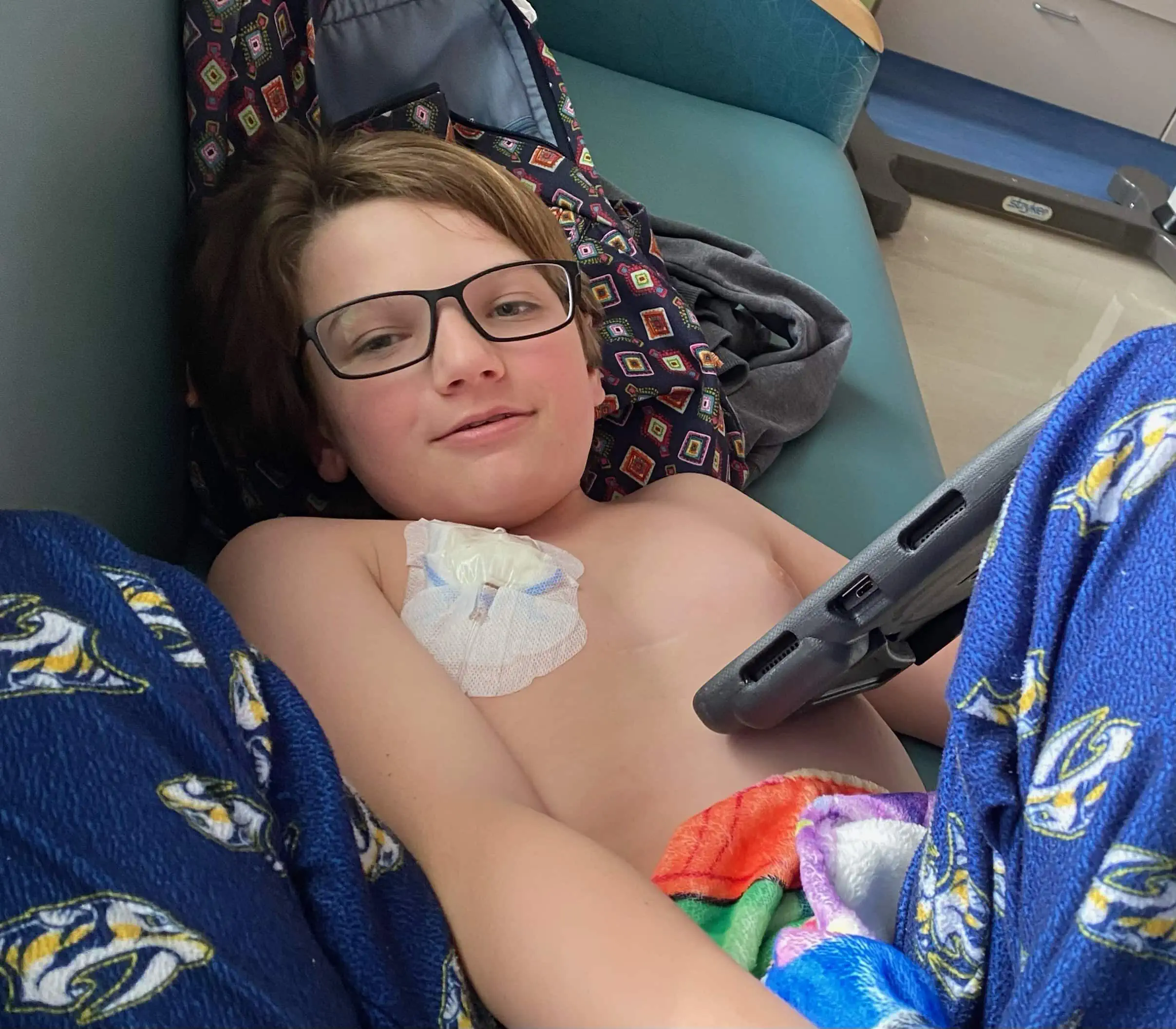
Easton has been fighting cancer for most of his twelve years. When he was 21 months old, he was constantly sick. His pediatrician noticed that his sickness was abnormal – he vomited more frequently in the mornings and while sitting in his car seat. A scan revealed a large tumor on Easton’s brain stem near the area that controls swallowing and nausea.
“The fact that Easton would get sick after being in his car seat made our pediatrician suspicious,” recalled his mother, Jill. “If the car seat hadn’t put pressure on the tumor, it might have taken longer to find.”
Easton had surgery to remove as much of the tumor as possible, followed by eight weeks of proton radiation in Jacksonville, Florida. His family was thrilled when a follow-up scan showed no presence of the tumor.
“We thought it was over,” said Jill. “We were told that if we had five years of clear scans, we wouldn’t have to worry about it again. Easton had four years of clear scans. But the cancer came back during the fifth year.”
Easton started treatment all over again in 2017 and experienced horrible side effects from the chemotherapy and radiation. Because the tumor grows around the area of the brain that controls swallowing, he has always had challenges eating. The awful mouth sores from his chemo caused him to be on a mostly liquid diet, and he had trouble maintaining weight.
In May 2022, Easton underwent a very risky surgery to try and remove the last part of the tumor. The surgery was unsuccessful. As he started recovering, Easton fell out of bed in the middle of the night. His parents rushed him to the emergency room, where doctors found that Easton’s brain was having a reaction to the glue that was used on his skull after surgery. He would need another risky brain surgery.
“This time, I felt like it was getting away from us and it was the beginning of the end,” said Jill. “He had been on some form of treatment for five years, and the tumor always found its way around it.”
But thanks to funding from CURE Childhood Cancer, Easton’s doctors have a new tool in their toolbox. CURE’s funds would pay for Easton’s tumor to be genetically mapped to see if his cancer involved any genetic mutations that could be targeted.
The genetic mapping revealed that a protein was feeding Easton’s tumor, causing it to grow. Doctors found an open clinical trial using a chemotherapy to inhibit this specific protein to prevent further tumor growth. Easton was immediately enrolled in the trial, and the results have been astounding. After four months, a scan showed that the inside of Easton’s tumor appeared to be dying. Three months later, the tumor is much smaller and is collapsing in on itself.
“The best news is that the tumor is dying. But also, he has no side effects. He can do the things a twelve-year-old should do while on this treatment,” shared Jill. “We’re still early in the process, but it has saved his life – at least at this point. I finally have hope for the first time in years. We are so encouraged and thankful to his doctors and to CURE for investing in precision medicine.”
Take the next step to support research that will help save kids with cancer… kids like Easton.



 “As a young adult, you think you have your entire life ahead of you,” Lexi reflected. “But then you get served this stark reality that you might not be here tomorrow. What am I going to do with all of the other things I planned to do with my life?”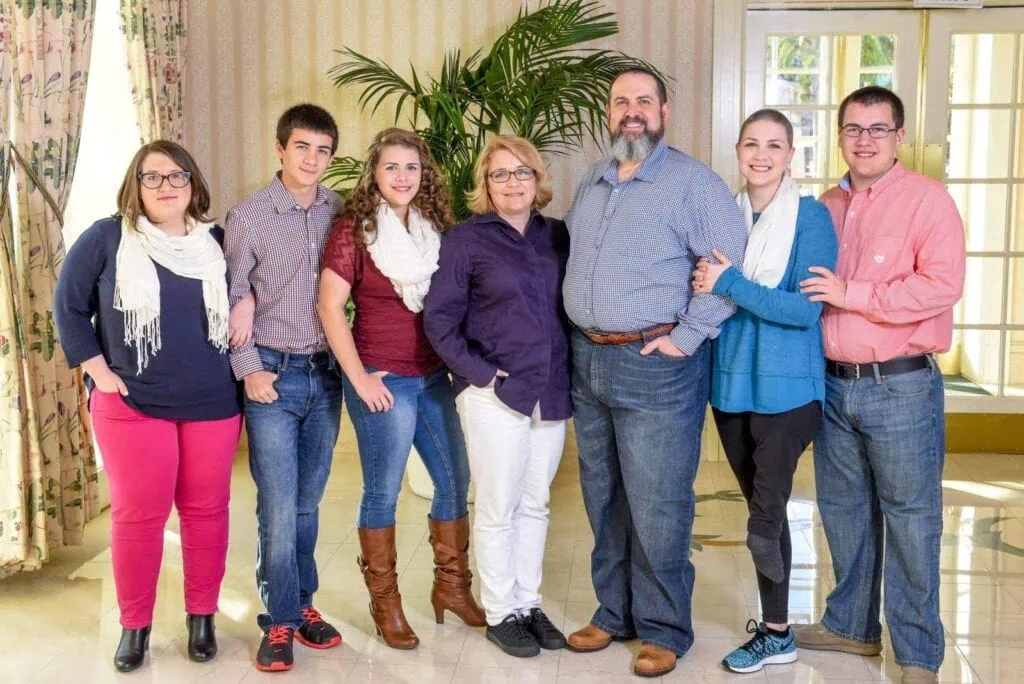

 Webb was diagnosed before he could crawl, before he could sit up, and before he could speak. He has battled his whole life. What started as difficulty and eventual inability to eat led to difficulty gaining weight, and the inability to meet developmental milestones. Finally, at seven months old, Laura and Scott knew the reason why.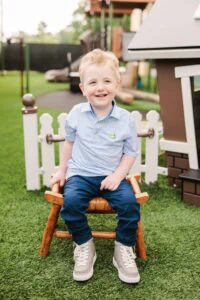

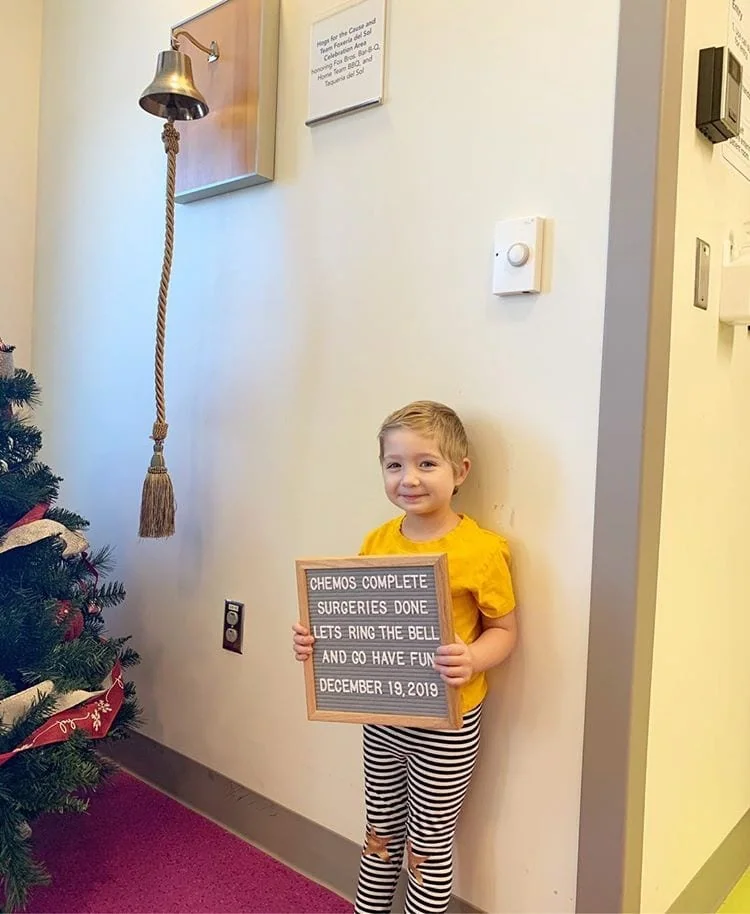 After two rounds of chemotherapy, Madeline regained her ability to walk. Surgeons managed to remove 85% of the tumor, though its connection to her spinal column prevented complete removal. Genetic testing through CURE’s Precision Medicine Program revealed a mutation associated with an aggressive form of neuroblastoma. But fortunately, the remnants of Madeline’s tumor have been stable. Knowing that Madeline has that particular genetic mutation will help doctors in the future should her tumor become active.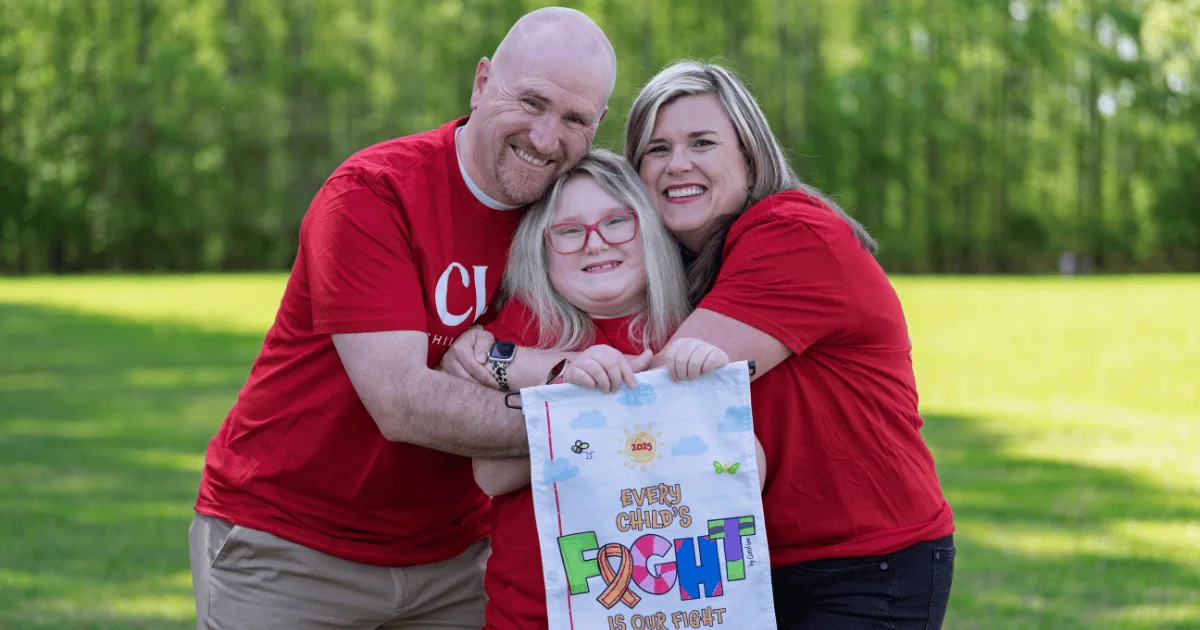
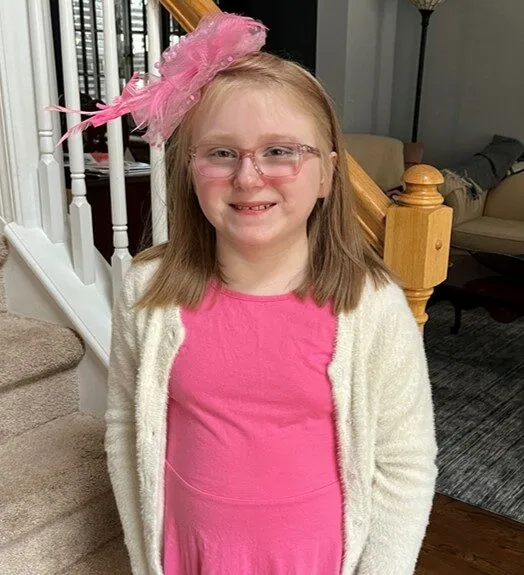 Genetic sequencing through CURE’s Precision Medicine Program revealed crucial information: her tumor carried a gene fusion called KIAA1549: BRAF. This discovery proved to be both a challenge and an opportunity. While traditional treatments would likely be less effective because of this mutation, the discovery opened the door to targeted therapies called MEK inhibitors that could block the activity of proteins that cause tumor growth.


 One day, Chrisean called Machelle from school because his chest hurt badly. She took him to the children’s hospital, where the doctor pulled down his eyelid and noticed his skin was nearly white. When he ordered a blood test, the staff found a new problem – Chrisean was terrified of needles. He was so big that the nurses had to get two men and a security officer to hold him down to draw blood. The blood test revealed that Chrisean had acute lymphoblastic leukemia.
 Ally received her first dose of chemotherapy within 16 hours of diagnosis. Over the two years of treatment that followed, Ally struggled with almost every possible side effect. She suffered three life-threatening infections, temporarily lost the ability to walk, and struggled to rebuild her immune system after every round of chemo.
 Easton had surgery to remove as much of the tumor as possible, followed by eight weeks of proton radiation in Jacksonville, Florida. His family was thrilled when a follow-up scan showed no presence of the tumor.

