

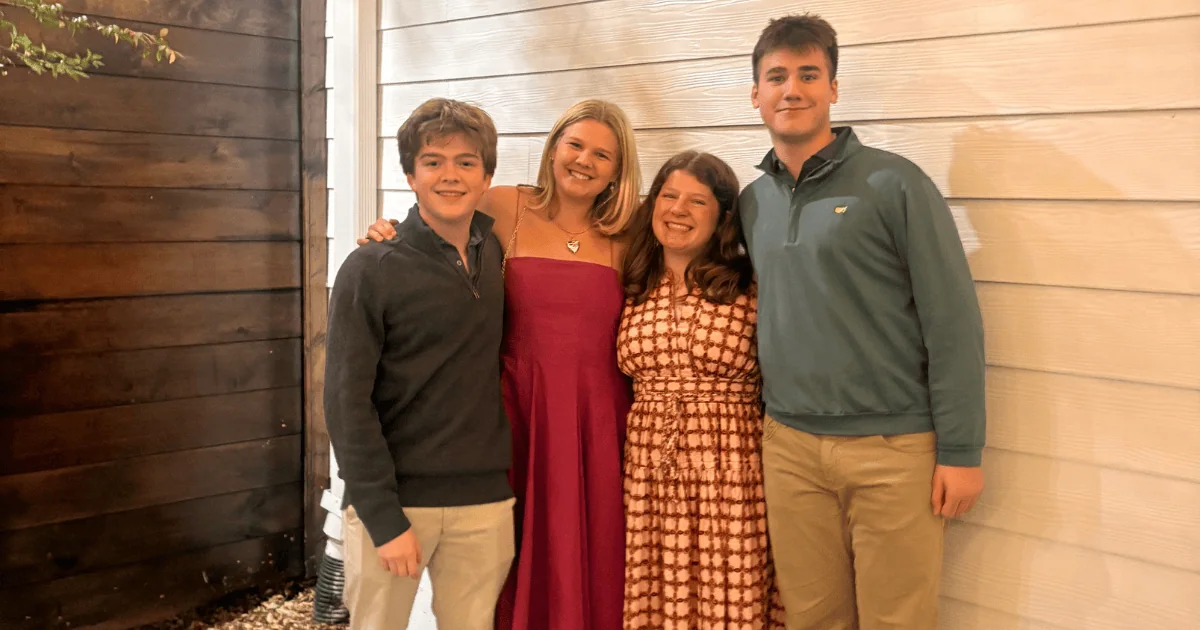
Four Savannah Students Carry the Torch for CURE Childhood Cancer
What began as a simple decision by one Savannah high school student has grown into a family legacy of service and compassion.
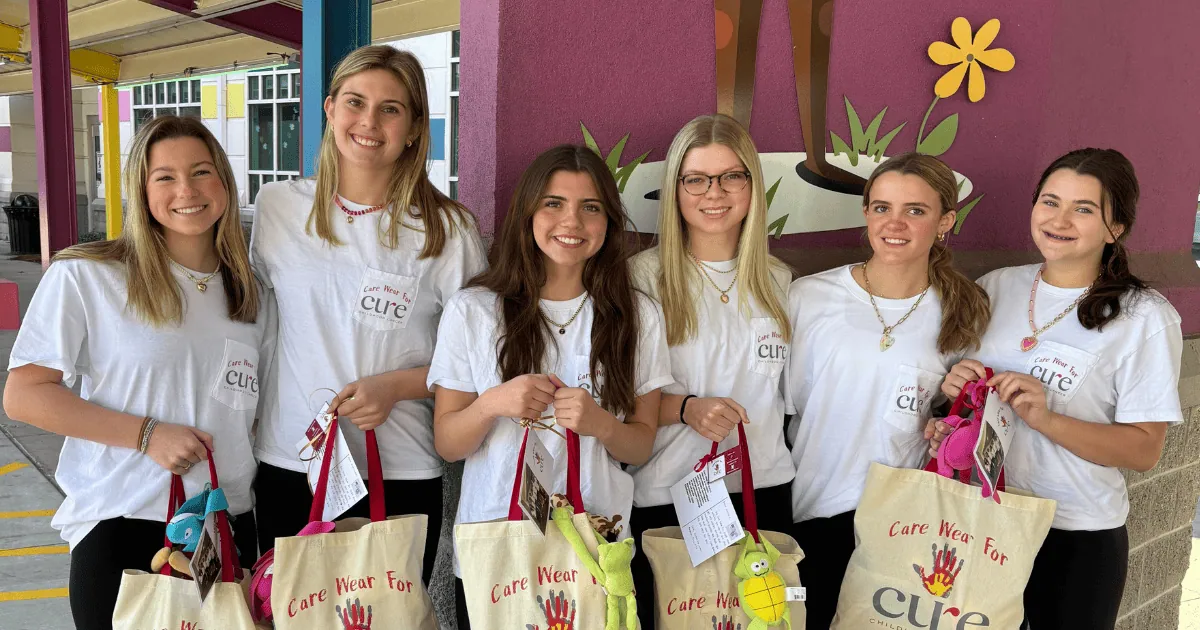
When St. Vincent’s Academy student Grace Mahfet applied to serve on CURE Childhood Cancer’s CURE Crew in 2021 as a rising junior, she had no idea she was beginning a volunteer tradition that would span five years and inspire three members of her family to follow in her footsteps.
CURE Crew is a teen leadership council that helps the organization raise awareness about pediatric cancer while supporting it through fundraising, advocacy, and volunteer service. Guided by CURE’s staff, Grace became a dedicated ambassador for the cause both in the Savannah community and at her school.
After her first year of service, Grace encouraged her cousin Julia Ronning, then a rising junior at Savannah Christian Preparatory School, to apply as well. The two served side by side, volunteering at events and helping spread CURE’s mission throughout their schools.
Their tradition of service didn’t stop after graduation. Grace went on to attend the University of Georgia, and Julia joined her the following year. Both have continued their commitment to philanthropy through their sorority. Soon, the next generation of volunteers was ready to step up.
With Grace and Julia at UGA, their younger brothers, Joe Joe Mahfet, a student at Benedictine Military School, and Max Ronning, a student at Savannah Arts Academy, joined the CURE Crew.
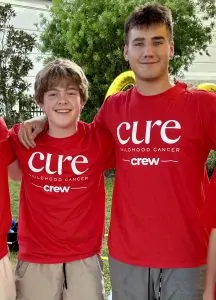 Now nearing the completion of their own two years of service with CURE Crew, both boys have become standout leaders within the program. Max and Joe Joe served as Senior Crew Leaders this year, helping guide younger members while continuing to volunteer at CURE events throughout the community.
“Max and Joe Joe are both just amazing young men with servants’ hearts,” Said Mandy Garola, CURE’s Vice President. “They show up, communicate well, work hard, and are friendly and cheerful. We’re lucky to have had all four of the Mahfet and Ronning students working with CURE. What a wonderful family and outstanding kids. These four will go far in life. I wish there were more of them.”
Both boys plan to continue the family tradition and join their sisters at the University of Georgia in the fall.
“I saw the impact CURE was having in the community while Julia was volunteering,” Max said. “It was exciting, and I wanted to be a part of it.”
“My biggest takeaway from volunteering with CURE is that we need more funding for better pediatric cancer treatments,” Joe Joe realized. “These kids deserve to go on and lead long, full lives.”
And that is exactly the future CURE is working toward.
Thanks to young leaders like Grace, Julia, Joe Joe, and Max, that mission continues to gain strength – one generation at a time.
If you are a high school junior or senior interested in CURE Crew Teen Council, CURE will be taking applications from April 10-20, 2026. Applications can be found at curechildhoodcancer.org/cure-crew-application.
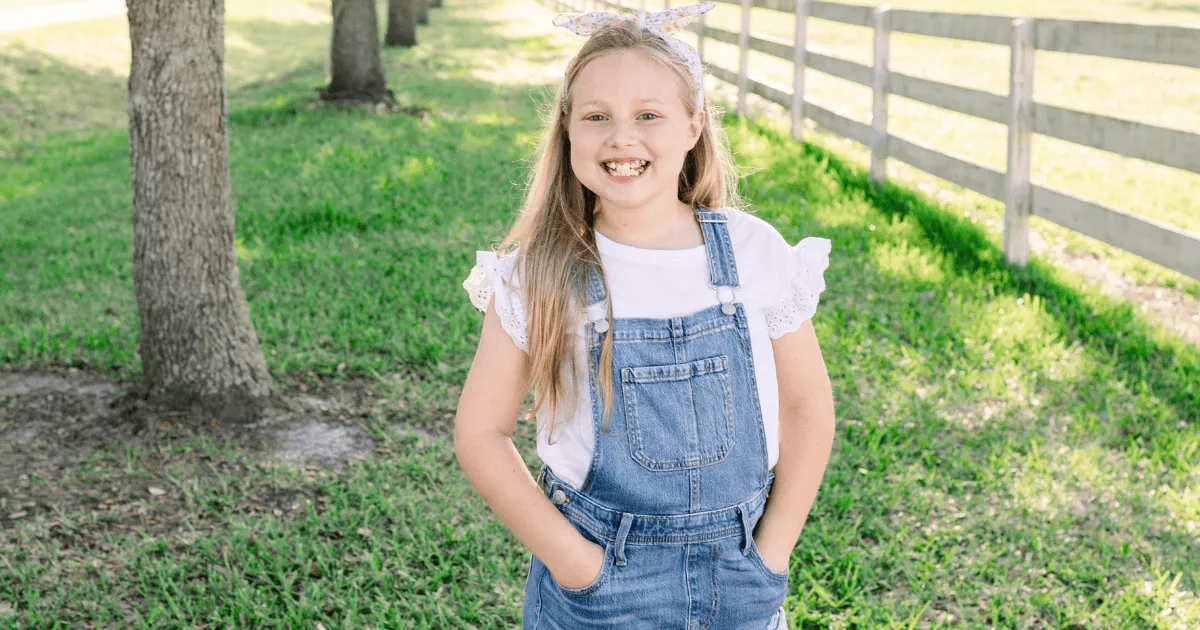
 Her world changed on May 29, 2016, when Addy was just 3½ years old. She was diagnosed with acute lymphocytic leukemia, but not the most common and treatable type. The overall survival rate for childhood ALL is approximately 90%. But testing revealed that her leukemia was Philadelphia chromosome positive. This rare and aggressive variant required an intense, prolonged treatment plan and carried a much worse prognosis.
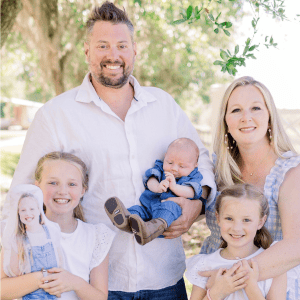 Addy’s time here was far too brief, but her impact is immeasurable. In her honor, her family established Addy’s Army Fund at CURE. The fund advances childhood cancer research with a focus on innovative treatments – like precision medicine and immunotherapies that are more effective and less damaging to growing bodies. It also supports quality-of-life programs for children in treatment, resources for siblings silently affected by a loved one’s diagnosis, and bereavement support for grieving families.



 “She didn’t suffer from too many side effects until she reached the long-term maintenance phase, which is supposed to be easier,” said Stacy. “She had more hospital stays and a lung infection that was difficult to treat. Going on our wish trip changed everything for her.”


 “Daniel’s freshman year and part of his sophomore year were from home because of COVID,” Felicia said. “He could only do partial days during his junior year because of treatment and finally got to go back to school full time for his senior year. He was very ready to get back to his friends and routine.”


