Category

Precision Medicine

2025 Research Awards

CURE Childhood Cancer is thrilled to announce a remarkable achievement in our 50-year mission to end childhood cancer: a $5.6 million investment in lifesaving research studies.

These 13 innovative research projects are led by renowned scientists at premier pediatric cancer research institutions across the country and target the most urgent challenges facing young patients. What makes this investment so powerful is that every project is designed with the goal of helping children within the next 2-3 years – not decades from now. All proposals underwent rigorous review by CURE’s Peer Review Committee, comprised of practicing pediatric oncologists and academic researchers.

For families facing devastating diagnoses, this funding represents real hope, not someday, but soon. Thank you for making this breakthrough investment possible.

“We are proud to partner with some of the brightest minds in pediatric cancer research – scientists who have devoted their lives to solving the most difficult challenges children with cancer face,” said Kristin Connor, CEO of CURE Childhood Cancer. “With so little federal funding directed toward pediatric cancers, our support is often the catalyst that allows critical science to move forward. We are laser-focused on changing the odds for children with few treatment options and on discovering therapies that don’t leave devastating lifelong side effects. It’s because of our incredible community of supporters that we can fuel this progress and continue pushing toward the day when every child has the chance to be cured.”

Thank you for being an essential part of this journey.

CURE’s 2025 RESEARCH AWARDS

Early Investigator Awards

Emily Heikamp, MD, PhD, Dana-Farber Cancer Institute
Targeting chromatin regulators of oncogenic transcription in NUP98-rearranged leukemia

Nathaniel Mabe, PhD, Purdue University
Selective targeting of epigenetic pathways underlying drug tolerant persistence in neuroblastoma

Palaniraja Thandapani, PhD, The University of Texas MD Anderson Cancer Center
Targeting Proline tRNA Biogenesis as a Therapeutic Strategy in NOTCH1-Driven T-ALL

Translation to CURE Awards

Manoj Bhasin, PhD, MS, Emory University
Interrogation of mast cells as a high-risk biomarker in core binding factor mutated pediatric acute myeloid leukemia

Kelly Goldsmith, MD, Emory University
Companion Molecular Imaging for PTK7 Targeted Immunotherapies in Pediatric Solid Tumors

Rintaro Hashizume, MD, PhD, University of Alabama at Birmingham
Intranasal Delivery of Targeted Nanotherapeutics and Oncolytic Virus in Pediatric Glioma

Raushan Kurmasheva, PhD, University of Texas Health Science Center at San Antonio
Advancing Innovative and Effective Therapies for Children with Malignant Rhabdoid Tumors

Kathy Fange Liu, PhD, University of Pennsylvania
METTL3-targeting ASOs and synthetic lethality approaches in pediatric neuroblastoma

Paul Sondel, MD, PhD, University of Wisconsin-Madison
Novel GD2/B7-H3 Bispecific Antibody with Agonist CD40 Antibody, Epigenetic Modifier Inhibitors and Checkpoint Blockade to Improve Treatment Efficacy for High-Risk Neuroblastoma

Michael Verneris, MD, University of Colorado Denver
Translational Strategies To Enhance B7-H3-CXCR2 CAR T Homing and Function in Sarcoma

Elvin Wagenblast, PhD, Icahn School of Medicine at Mount Sinai
PR Domain Inhibition to Target Leukemia Stem Cells in Pediatric Acute Myeloid Leukemia

Muxiang Zhou, MD, Emory University
Dual inhibition of MDM2 and tubulin for precision treatment of acute myeloid leukemia

Precision Medicine Program, Children’s Healthcare of Atlanta
A program leveraging genomic sequencing for pediatric patients with high-risk tumors, with the goal of identifying alterations that can impact therapies and improve outcomes.
How Genetic Testing Changed Caroline’s Treatment

Caroline’s life took a dramatic turn just after her first birthday. At ten months old, she began losing weight and battling what seemed to be a stubborn ear infection. What her parents initially thought was a routine childhood illness led to an MRI that revealed a more serious condition: a tumor attached to her optic nerve. The diagnosis was juvenile pilocytic astrocytoma (JPA), typically one of the more treatable brain tumors with an excellent survival rate due to its rare tendency to spread.

However, Caroline’s case would prove anything but typical. After surgeons successfully removed half of the tumor, follow-up MRIs revealed the unthinkable – the cancer had spread, with new spots appearing on her brain and at the base of her spine. This put Caroline in the rare 2-3% of JPA cases that metastasize, leaving her medical team searching for answers.

Genetic sequencing through CURE’s Precision Medicine Program revealed crucial information: her tumor carried a gene fusion called KIAA1549: BRAF. This discovery proved to be both a challenge and an opportunity. While traditional treatments would likely be less effective because of this mutation, the discovery opened the door to targeted therapies called MEK inhibitors that could block the activity of proteins that cause tumor growth.

Caroline began immunotherapy and the genetic insight led her doctors to enroll her in a couple of clinical trials using these inhibitors. They finally began to see stable results with a better quality of life. After several years of hour-long infusions, followed by nausea, fatigue and hair thinning, Caroline was able to begin taking medication orally which mean fewer trips to the hospital.

In April 2023, Caroline had an emergency shunt placement to relieve the pressure caused by an excess of cerebral fluid. At that time, the surgeon took another tumor sample for additional gene sequencing. These results led them to a new clinical trial using a Type II pan-RAF kinase inhibitor that works by blocking a protein called Type II RAF kinase. After 6 months, the tumor mass showed a visible reduction, and two metastasized spots had nearly disappeared. Even more encouraging, her vision remained stable, a crucial concern given the tumor’s location near her optic nerve.

“We love to hear that the tumor is shrinking.” Said Caroline’s mother, Camille. “But we’ve been fighting so long that we’ve learned to appreciate and accept the word stable, too.”

When tumor growth was detected in July 2024, her doctors adjusted her treatment plan based on their understanding of her tumor’s genetic profile, leading to promising results.

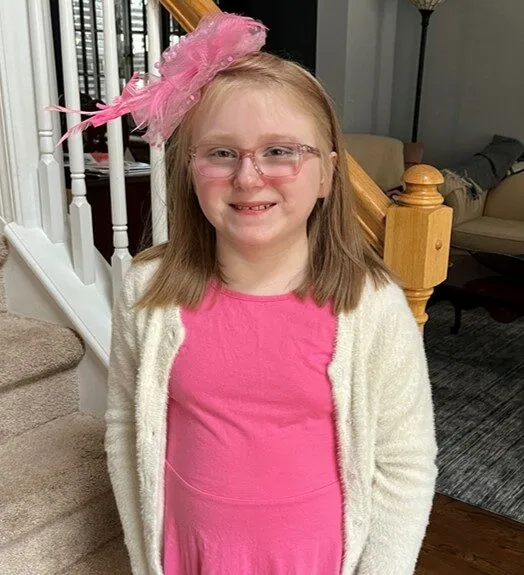
Today, Caroline continues to navigate her treatment journey with resilience. She is eleven years old and has found joy in creative pursuits. She excels at diamond art, a hobby that involves applying tiny resin diamonds onto a canvas to create designs. Despite her visual challenges, Caroline shows remarkable precision in placing the diamonds. She has also taken to writing and is 50 pages into a new book.

Caroline’s case is unique and complex. Thanks to precision medicine, her treatment path continues to evolve, guided by the genetic insights that have proven so valuable. Her story demonstrates the vital role genetic testing plays in modern cancer treatment, allowing doctors to create personalized treatment plans that target specific mutations and allow children like Caroline to thrive.

Rowan’s Story: Joy, Strength, and Genetic Breakthroughs

In late 2021, eight-year-old Rowan arrived at the emergency room weakened by weeks of unexplained illness. Due to Covid-related restrictions, his father and brother waited at home while his mother sat with him, unaware that their lives would change forever. After testing, doctors found a golf ball-sized tumor in Rowan’s cerebellum, blocking the natural flow of spinal fluid through his brain.

What followed was a whirlwind of surgeries, treatments, and countless hours in hospital rooms. Through six weeks of daily proton radiation therapy and nine cycles of chemotherapy, Rowan powered through every side effect. Even during his first chemo infusion, he sat calmly eating Doritos as if it were just another ordinary day. His younger brother stood by his side, ready to play whenever Rowan had the energy. They often played with Legos, which helped rebuild his fine motor skills.

Between treatments, Rowan looked for every opportunity for joy. He conquered a rock-climbing wall, soared through an aerial obstacle course, and proved his tenacity by completing the third grade on time despite spending much of the year in treatment. When his port was finally removed in November 2022, his family felt like a new chapter was beginning.

But in October 2023, a second tumor appeared – a high-grade glioma caused by his previous radiation treatment. This time, the treatment path was guided by genetic sequencing thanks to CURE’s investment in the Precision Medicine Program. Through this testing, doctors discovered that Rowan had Li Fraumeni Syndrome (LFS). Most people have a pair of proteins that keep cells from growing abnormally and becoming cancerous. Because of LFS, Rowan’s body doesn’t make enough of these proteins, and cells can divide uncontrolled and form tumors.

Without the genetic sequencing, Rowan would have undergone rounds of harsh infusion chemotherapy. Instead, armed with the knowledge of his LFS, doctors opted for a more targeted approach with oral chemotherapy that reduced his risk for additional tumors. The genetic testing also revealed that Rowan had inherited LFS from his mother, Charlan, leading to important, life-long, monitoring protocols for both of them.

Rowan & Jacob Today

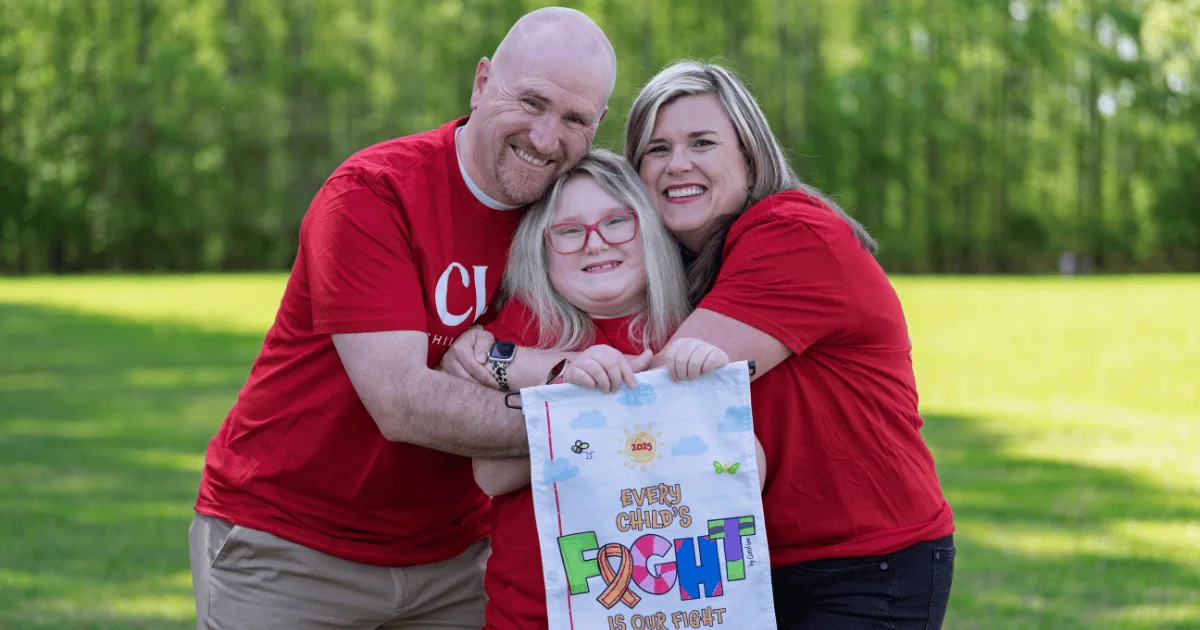
Rowan is eleven years old and writing a new chapter of his story. He is in middle school, plays the trombone, and continues to choose joy every day. Regular MRIs every three months keep careful watch, allowing doctors to catch and treat any potential issues in the early, more treatable phase. Made possible by genetic sequencing, this proactive approach gives Rowan and his family the power of knowledge and early intervention.

“We won’t put their heads in the sand but rather face each day armed with understanding and hope.” his mother, Charlan, said. “For Rowan’s younger brother Jacob, genetic testing brought relief because it confirmed he doesn’t carry the LFS gene.”

Rowan’s story illustrates the power of precision medicine and genetic sequencing in childhood cancer care. It’s about a boy who loves his family and friends, being in school, and trying many kinds of games and activities – and how scientific advancement helps him continue doing all these things. Through genetic testing and a determination to find joy in every moment, Rowan and his family continue their journey – not just surviving but truly living.

It’s in the Genes

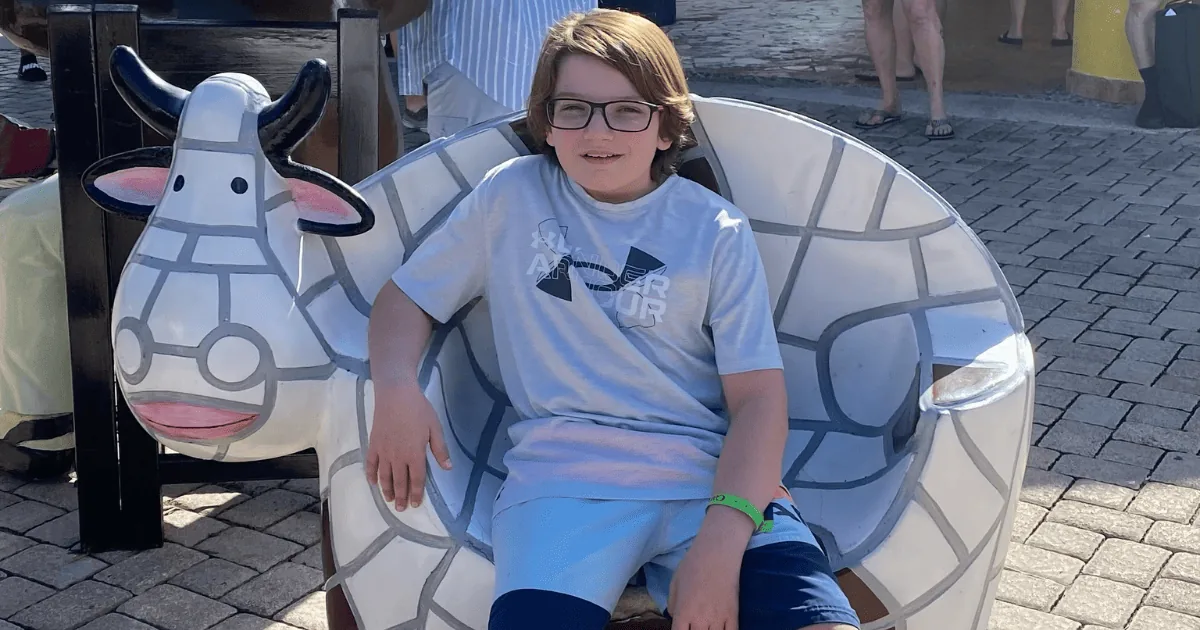
Ally has been through a lot in her eleven years. When she was two years old, she fell off a stool while playing with her brother. A large bruise appeared on her stomach almost immediately, and her parents took her to their local hospital. After blood work, they learned that Ally had B-cell acute lymphoblastic leukemia. “We were told that within days, she would have had uncontrollable bleeding without treatment,” said Ally’s mother, Amber. “Her body was working so hard to fight the cancer that her heart would have given out. It is hard to be glad for your child to fall, but that fall saved her life.”

Ally received her first dose of chemotherapy within 16 hours of diagnosis. Over the two years of treatment that followed, Ally struggled with almost every possible side effect. She suffered three life-threatening infections, temporarily lost the ability to walk, and struggled to rebuild her immune system after every round of chemo.

“We were given a bleak prospect of survival during her second fight with an infection,” shared Amber. “We prayed for a miracle and finally got one when her body started to respond to antibiotics.”

Her treatment finally ended on August 24, 2018, but her battle was far from over because her immune system did not recover as expected. Even years later, her doctors were concerned because she was still living with depleted immune function. In 2022, they decided to do genetic sequencing on Ally and her family to see if a disorder was causing her immune system deficiency. What the sequencing uncovered has lifelong implications for Ally and her family.

“My nephew was diagnosed with leukemia after Ally,” said Amber. “So I expected that if there was an inherited genetic trait linked to her cancer or her body’s response to treatment, it would be on my side. We found out that the opposite was true.”

Ally shares a genetic condition called Lynch syndrome with her father, Justin. This condition increases the risk of many kinds of cancer, including colon cancer, endometrial cancer, and other types. Knowing this will allow Justin and Ally to be monitored for early signs of cancer, giving treatment a greater chance of success. Ally sees a doctor with expertise in genetic conditions every year, and her parents are updated on new testing and protocols. Ally is doing great today. She is in her first year of middle school and enjoys competing in pageants. Her parents are grateful for her health and credit CURE’s investment in precision medicine as a big part of it.

“I have a friend who just went through breast cancer treatment, and her genetic testing cost $4,000 out of pocket,” Amber said. “The cost of repeated gene sequencing for us would have been staggering. But it didn’t cost us a dime because of CURE’s funding. We wouldn’t have known about the syndrome without it. With this knowledge, we can be prepared and should be able to detect any cancer in Ally or Justin early.”

2024 Research Awards

We are excited to share a significant step forward in CURE’s 49-year effort to find cures for childhood cancers as we proudly announce a $5.6 million investment in innovative research studies – the largest amount we’ve ever committed in a single year.

This record-breaking investment represents an important advancement in our ongoing work. It reflects the growing support of our community, the persistent dedication of researchers, and our unwavering commitment to finding better treatments for children with cancer.

These studies are led by top scientists at leading pediatric cancer research institutions nationwide and focus on the most critical needs. Here’s what makes this investment so impactful:

  • Advancing Precision Medicine: We’re awarding $2 million to the Aflac Precision Medicine Program, reinforcing our leadership in this crucial field. This funding expands access to genetic sequencing for young patients. It accelerates research into targeted therapies, bringing us closer to truly personalized treatments and giving hope to many children with aggressive or recurring cancers.
  • Funding Diverse, Innovative Research: The remaining $3.6 million funds 11 promising projects carefully selected from over 90 applications. These studies address some of the most challenging childhood cancers with limited or outdated treatments, employing innovative approaches that could significantly improve treatment outcomes.
  • Bridging Research and Treatment: Time is precious in the fight against childhood cancer. That’s why we’ve prioritized studies with strong potential for rapid clinical translation, potentially bringing new treatments to children faster than ever before.
  • Harnessing Immune Power: Within every child’s body lies an army of potential cancer-fighting cells. Several projects focus on enhancing cutting-edge immunotherapy approaches, unlocking the full potential of the body’s own defense mechanisms, and offering new possibilities for children battling resistant forms of cancer.
  • Looking Beyond Remission: The fear of relapse looms heavy for patients and families. By investigating mechanisms of recurrence, these studies aim to improve long-term outcomes and quality of life for survivors – and offer children a chance at a cancer-free future.

As we make these awards, we’re filled with a sense of purpose and hope. While the road ahead may be challenging, each step forward brings us closer to our goal of conquering childhood cancer.

Thank you for being an essential part of this journey.

CURE’s 2024 RESEARCH AWARDS

Early Investigator Awards

Rula Green Gladden, MD, Fred Hutchinson Cancer Center
Redefining residual disease detection in pediatric AML

Elizabeth Young, MD, University of California, San Francisco
Defining determinants of a cGAS-STIGN-mediated anti-tumor inflammatory response in osteosarcoma

Translation to CURE Awards

Eric Sweet-Cordero, MD, University of California, San Francisco
Defining replication stress and DNA damage as a therapeutic vulnerability in osteosarcoma

Pavithra Viswanath, PhD, University of California, San Francisco
Targeting and imaging serine metabolism in the tumor microenvironment in pediatric brain tumors

Michael Andreeff, MD, PhD,  University of Texas, M.D. Anderson Cancer Center,
c-MYC protein degradation in therapy-resistant pediatric leukemias

Eugenie Kleinerman, MD, University of Texas, M.D, Anderson Cancer Center
Metabolic reprogramming of the Ewing Sarcoma tumor microenvironment using pramlintide to augment NK cell immunotherapy

Kristopher Bosse, MD, Children’s Hospital of Philadelphia
Development of a GPC2 CAR T cell amplifying RNA vaccine

Alex Huang, MD, PhD, Case Western Reserve University
Effective TGF-beta signaling blockade synergizes cryoablation-induced STING activation in treating refractory and metastatic sarcoma

Jason Yustein, MD, Emory University
Dissecting and targeting PAK4-mediated signaling in Ewing Sarcoma development and metastasis

David Robbins, PhD, Georgetown University
Defining the druggable GLI Interactome in medulloblastoma

Soheil Meshinchi, MD, PhD, Fred Hutchinson Cancer Center
Rapid Transition of B7-H3 Targeted Therapies to High-Risk Childhood AML

Precision Medicine Program, Children’s Healthcare of Atlanta
A program leveraging genomic sequencing for pediatric patients with high-risk tumors, with the goal of identifying alterations that can impact therapies and improve outcomes.

We Finally Have Hope

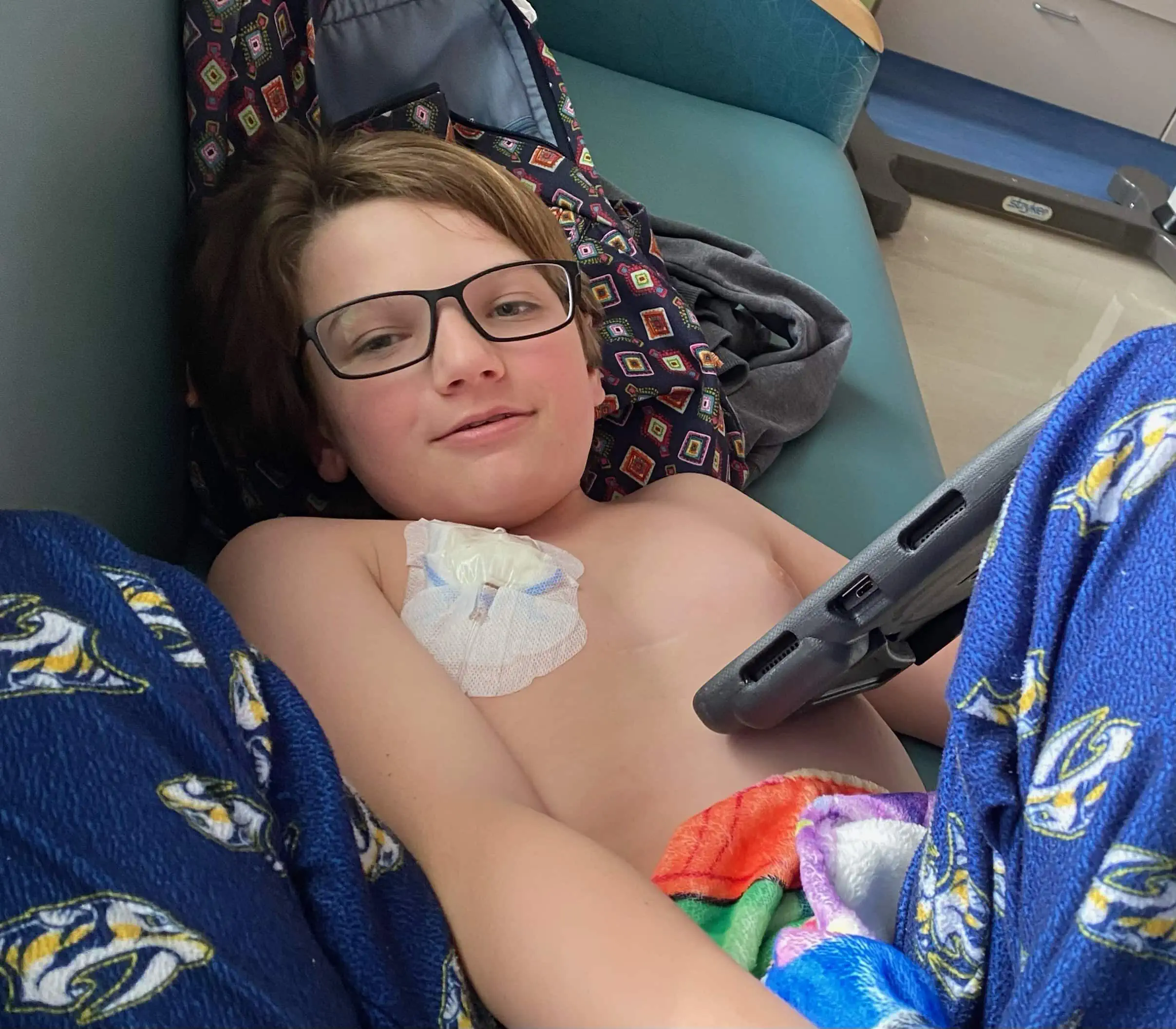
young boy named Easton, a recipient of personalized cancer medicine

Easton has been fighting cancer for most of his twelve years. When he was 21 months old, he was constantly sick. His pediatrician noticed that his sickness was abnormal – he vomited more frequently in the mornings and while sitting in his car seat. A scan revealed a large tumor on Easton’s brain stem near the area that controls swallowing and nausea.

“The fact that Easton would get sick after being in his car seat made our pediatrician suspicious,” recalled his mother, Jill. “If the car seat hadn’t put pressure on the tumor, it might have taken longer to find.”

Easton had surgery to remove as much of the tumor as possible, followed by eight weeks of proton radiation in Jacksonville, Florida. His family was thrilled when a follow-up scan showed no presence of the tumor.

“We thought it was over,” said Jill. “We were told that if we had five years of clear scans, we wouldn’t have to worry about it again. Easton had four years of clear scans. But the cancer came back during the fifth year.”

Easton started treatment all over again in 2017 and experienced horrible side effects from the chemotherapy and radiation. Because the tumor grows around the area of the brain that controls swallowing, he has always had challenges eating. The awful mouth sores from his chemo caused him to be on a mostly liquid diet, and he had trouble maintaining weight.

In May 2022, Easton underwent a very risky surgery to try and remove the last part of the tumor. The surgery was unsuccessful. As he started recovering, Easton fell out of bed in the middle of the night. His parents rushed him to the emergency room, where doctors found that Easton’s brain was having a reaction to the glue that was used on his skull after surgery. He would need another risky brain surgery.

“This time, I felt like it was getting away from us and it was the beginning of the end,” said Jill. “He had been on some form of treatment for five years, and the tumor always found its way around it.”

But thanks to funding from CURE Childhood Cancer, Easton’s doctors have a new tool in their toolbox. CURE’s funds would pay for Easton’s tumor to be genetically mapped to see if his cancer involved any genetic mutations that could be targeted.

The genetic mapping revealed that a protein was feeding Easton’s tumor, causing it to grow. Doctors found an open clinical trial using a chemotherapy to inhibit this specific protein to prevent further tumor growth. Easton was immediately enrolled in the trial, and the results have been astounding. After four months, a scan showed that the inside of Easton’s tumor appeared to be dying. Three months later, the tumor is much smaller and is collapsing in on itself.

“The best news is that the tumor is dying. But also, he has no side effects. He can do the things a twelve-year-old should do while on this treatment,” shared Jill. “We’re still early in the process, but it has saved his life – at least at this point. I finally have hope for the first time in years. We are so encouraged and thankful to his doctors and to CURE for investing in precision medicine.”

Take the next step to support research that will help save kids with cancer… kids like Easton.

DONATE