

Lexi’s Story of Resilience and Motherhood
Ten years ago, Lexi Sklar’s life took an unexpected turn. At just 21 years old, in the prime of spreading her independent wings, she received a diagnosis that would temporarily clip them. What began as what seemed like a gym injury revealed itself as something far more serious, a tumor called osteosarcoma.
 “As a young adult, you think you have your entire life ahead of you,” Lexi reflected. “But then you get served this stark reality that you might not be here tomorrow. What am I going to do with all of the other things I planned to do with my life?”
Among those plans was starting a family. The tumor was so aggressive that she began chemotherapy immediately. There was no time for any fertility treatment. The possibility of motherhood seemed to slip away along with so many other dreams.
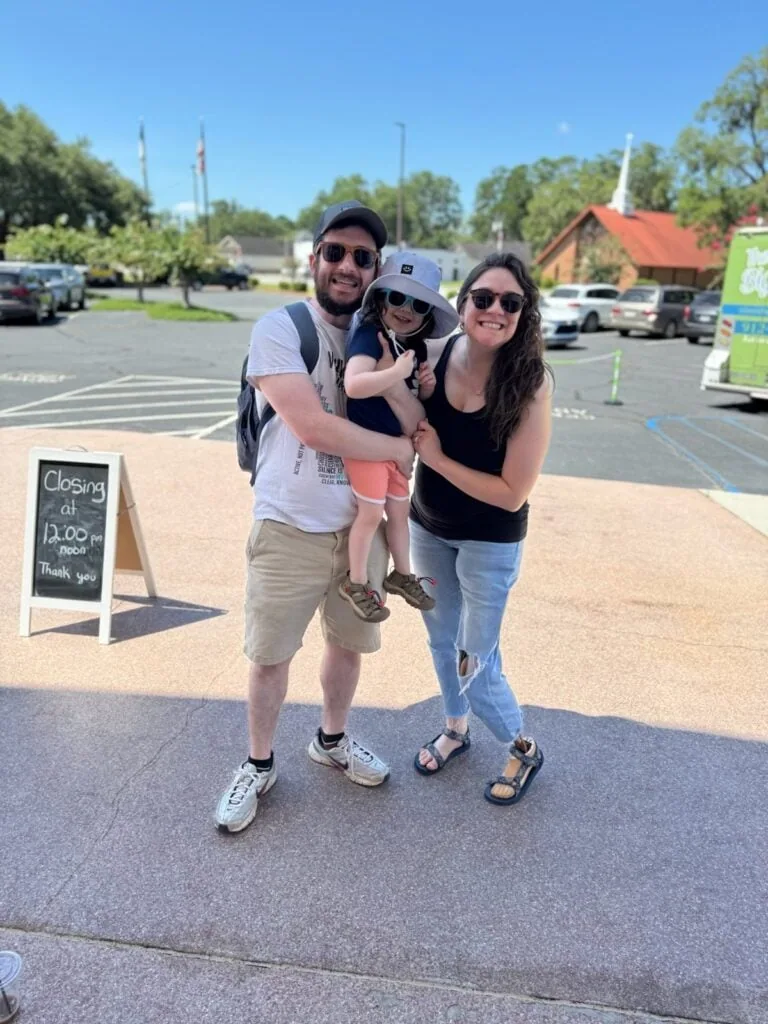
But today, Lexi’s 2 ½-year-old daughter Charlotte runs around with unbridled energy, while Lexi nurtures her second pregnancy – a reality she once couldn’t imagine possible.
“Both of my pregnancies are absolute miracles,” she says with quiet wonder.
Her journey included a rotationplasty, a procedure in which the knee is amputated, and the foot and ankle are rotated 180 degrees and attached to the thigh bone, effectively creating a new functional knee. While she muses that it is not “aesthetically the prettiest thing in the world,” it gave her something beautiful: freedom of movement without the limitations of a traditional amputation.
“I love it,” she stated firmly about her surgical choice. “It allows me to be active.”
That activity extended to wheelchair basketball, which she’s played for three seasons, and walking confidently across the college graduation stage in 2016 – a goal she set during her darkest days of treatment. Through it all, one constant presence remained: her mother, Heather, herself a cancer survivor.
“The role that my mom took during my treatment – I don’t think that there are enough thank yous in the world for how much of her life she gave up to be there for me,” Lexi shares. “Making sure someone was in my corner all the time.”
Her mother’s guidance came with a profound promise: “There are things that I experienced in my cancer journey that I can help you with. But there are things that we will have to push through together.”
It’s no wonder that “hope” became Lexi’s favorite word during treatment, so much so that she named her dog after it.
“When things are at their worst, there is always room for a little hope,” she said. “You can always look to hope for a light in dark times.”
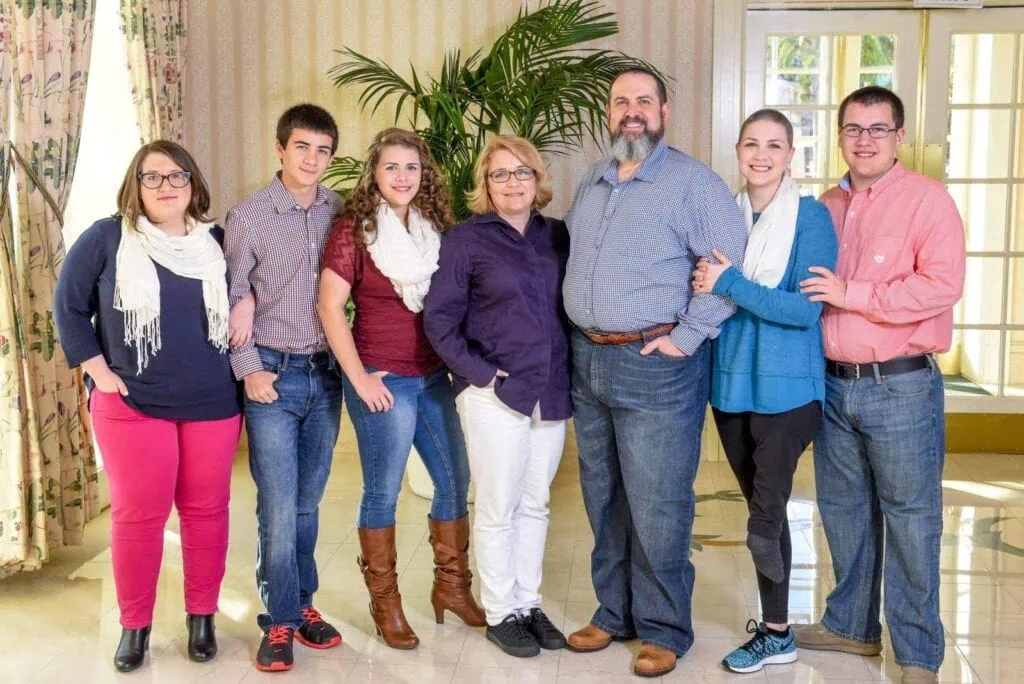
Lexie and her family


