Category

Survivorship

The Power of Perspective

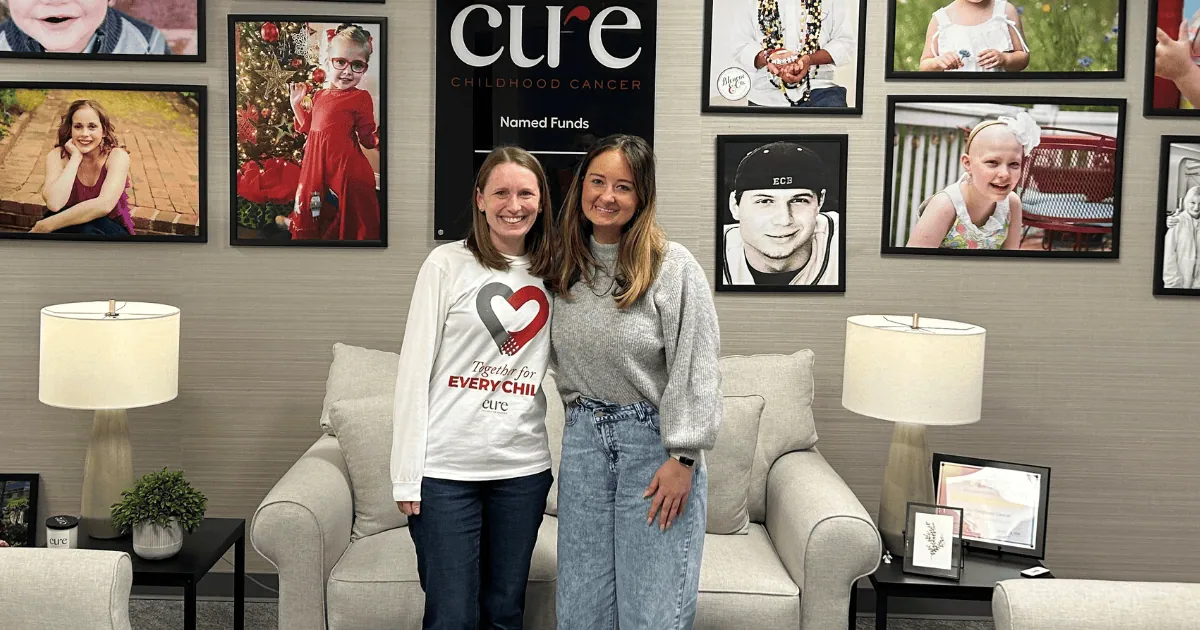
Wecome Kate and Katie

Among CURE’s dedicated staff are eight parents of survivors, two bereaved parents, four siblings, and now, three childhood cancer survivors. This perspective isn’t something we sought out; it’s what naturally happens when people who’ve walked this path find their way to work that honors their journey. Wherever a family is in their childhood cancer experience, someone at CURE has been there too.

This month, we welcome two tremendous additions to our team, both of whom are childhood cancer survivors.

Kate Bellamy was just two years old when she was diagnosed with leukemia. Though she doesn’t remember much from those three years of treatment, childhood cancer shaped her path in profound ways. Growing up, CURE was woven into her life. She was treated by CURE’s founder, Dr. Abdel Ragab, and even appeared on a CURE billboard as a child. The organization that supported her family became a familiar presence, and the medical environment felt like a second home.

That early experience led Kate to pursue a master’s degree in family and child development and spend eight years as a child life specialist. She still remembers a nurse who gave her a party blower during treatment to help her calm down. It was a small gesture that would later become a tool she used to comfort other children in her own career.

Now, Kate is bringing that compassion to an important role. At CURE, she will be at the hospital with the families, providing help and support during their time of greatest need. “Being able to help families in a tangible way during such a difficult time is deeply meaningful to me,” she shared.

Katie Rutherford’s cancer story began during Christmas break of her sophomore year of high school, when a small bump on her chin grew into something that would change everything. A rhabdomyosarcoma diagnosis meant 48 weeks of chemotherapy and 30 days of radiation. She pushed through treatment while keeping up with schoolwork, graduated with her class, and never lost sight of what matters most.

After graduating from Valdosta State University, Katie worked for Children’s Healthcare of Atlanta and is now starting a new chapter as CURE’s Senior Development Coordinator for Events & Initiatives. In this role, Katie will channel her experience into action for others.

“I’m thrilled to join CURE because the organization champions childhood cancer research while creating real, immediate impact for families today,” she said. “This work makes a difference to so many people, including me and my family.”

Kate and Katie remind us why we do this work: because every child deserves the chance to grow up, find their purpose, and make a difference.

Hope Walks With Us

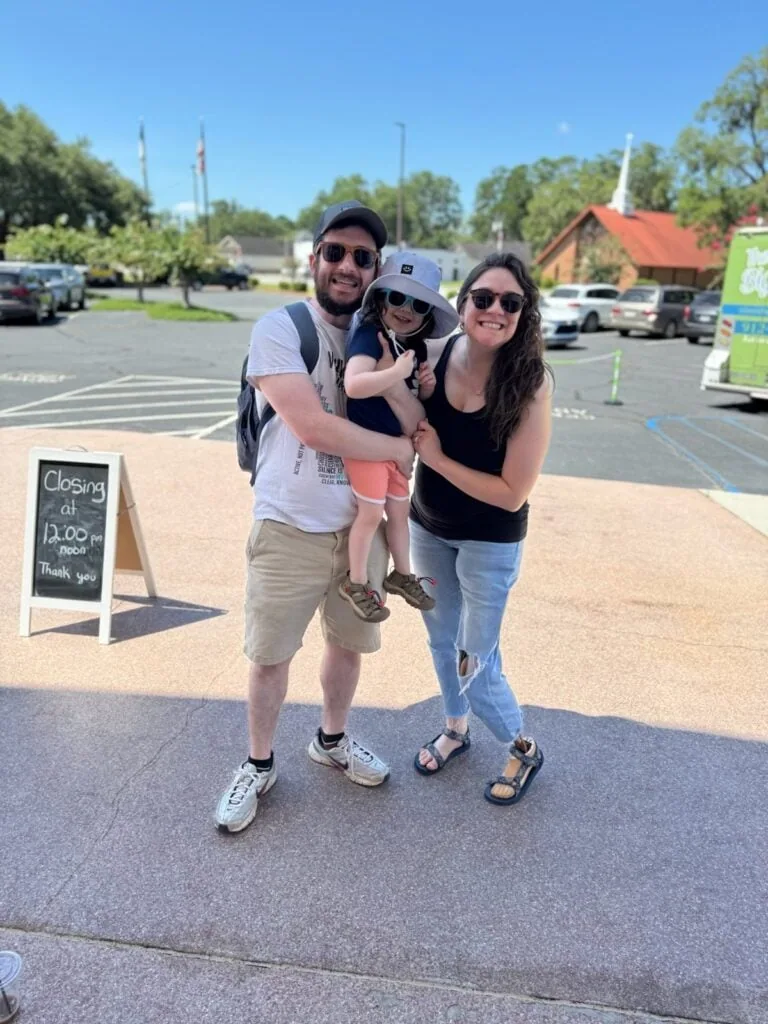
Lexie Sklar with daughter and husband

Lexi’s Story of Resilience and Motherhood

Ten years ago, Lexi Sklar’s life took an unexpected turn. At just 21 years old, in the prime of spreading her independent wings, she received a diagnosis that would temporarily clip them. What began as what seemed like a gym injury revealed itself as something far more serious, a tumor called osteosarcoma.

Lexie Sklar with husband and daughter“As a young adult, you think you have your entire life ahead of you,” Lexi reflected. “But then you get served this stark reality that you might not be here tomorrow. What am I going to do with all of the other things I planned to do with my life?”
Among those plans was starting a family. The tumor was so aggressive that she began chemotherapy immediately. There was no time for any fertility treatment. The possibility of motherhood seemed to slip away along with so many other dreams.

But today, Lexi’s 2 ½-year-old daughter Charlotte runs around with unbridled energy, while Lexi nurtures her second pregnancy – a reality she once couldn’t imagine possible.

“Both of my pregnancies are absolute miracles,” she says with quiet wonder.

Her journey included a rotationplasty, a procedure in which the knee is amputated, and the foot and ankle are rotated 180 degrees and attached to the thigh bone, effectively creating a new functional knee. While she muses that it is not “aesthetically the prettiest thing in the world,” it gave her something beautiful: freedom of movement without the limitations of a traditional amputation.

“I love it,” she stated firmly about her surgical choice. “It allows me to be active.”

That activity extended to wheelchair basketball, which she’s played for three seasons, and walking confidently across the college graduation stage in 2016 – a goal she set during her darkest days of treatment. Through it all, one constant presence remained: her mother, Heather, herself a cancer survivor.

“The role that my mom took during my treatment – I don’t think that there are enough thank yous in the world for how much of her life she gave up to be there for me,” Lexi shares. “Making sure someone was in my corner all the time.”

Her mother’s guidance came with a profound promise: “There are things that I experienced in my cancer journey that I can help you with. But there are things that we will have to push through together.”

It’s no wonder that “hope” became Lexi’s favorite word during treatment, so much so that she named her dog after it.

“When things are at their worst, there is always room for a little hope,” she said. “You can always look to hope for a light in dark times.”


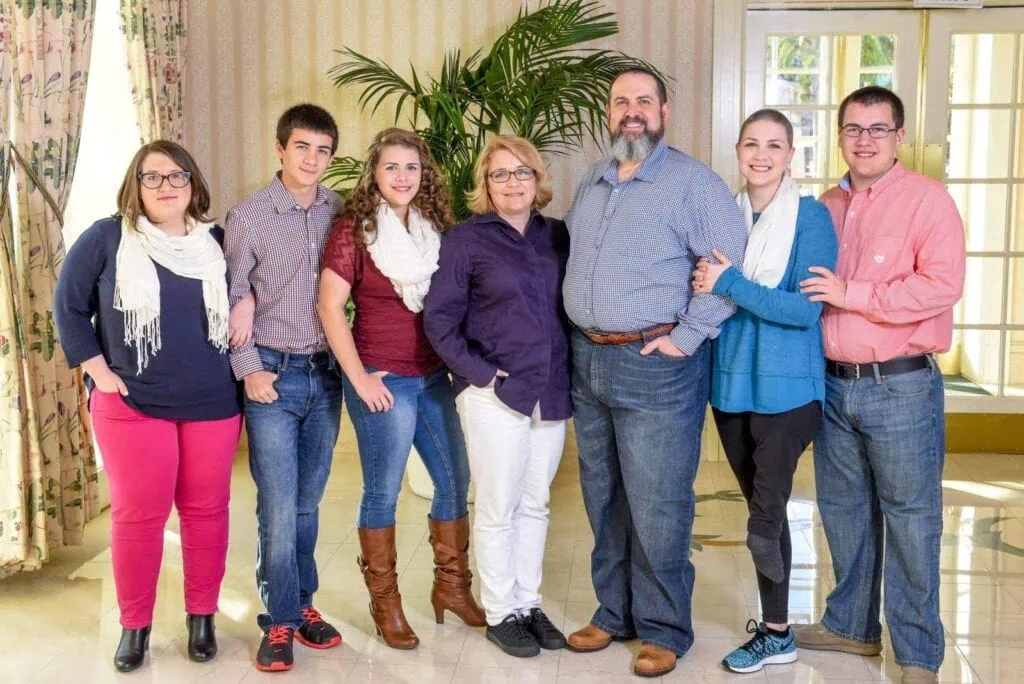
Lexie and her family

Lexie and her family

Healing Together: A Daughter’s Fight, A Mother’s Mission

Madeline’s journey began with subtle signs that something was different. At two years old, her motor skills lagged behind her peers, and she seemed to fall more often than other children. Her mother, Bethany, recalled those early days, not realizing the challenges that lay ahead.

Just after Madeline’s third birthday, everything changed. Severe leg pain and her inability to walk prompted Bethany to insist on further testing. A total body scan revealed a football-sized mass in her abdomen, crushing her internal organs. The diagnosis was neuroblastoma, a type of pediatric cancer that forms in immature nerve cells.

After two rounds of chemotherapy, Madeline regained her ability to walk. Surgeons managed to remove 85% of the tumor, though its connection to her spinal column prevented complete removal. Genetic testing through CURE’s Precision Medicine Program revealed a mutation associated with an aggressive form of neuroblastoma. But fortunately, the remnants of Madeline’s tumor have been stable. Knowing that Madeline has that particular genetic mutation will help doctors in the future should her tumor become active.


Another aspect of precision medicine involves looking into a child’s genetic predisposition. Madeline’s younger sister, Sedona, has a genetic disorder called hemihypertrophy, which is a growth disorder. So she was referred to the genetic predisposition clinic to see if her genetic mutation was the same as Madeline’s. If a genetic link between the two was revealed, it might indicate that Sedona had a high risk of developing cancer in the future. No link was found, but both sisters will be continually monitored so that any cancer can be detected early when it is more treatable.

Madeline finished her treatment and was declared cancer-free. Five years later, she reached a big milestone – she was officially a cancer survivor. Now nine years old and soon to start the fourth grade, she continues to thrive despite some lingering side effects. Her gross motor skills are somewhat challenged, but she doesn’t mind that she can’t hula hoop as well as other kids in her class. She remains incredibly confident and understands that everyone has their own strengths.

Madeline’s battle inspired a profound transformation in her mother. Bethany, who had been working in tech at IBM, decided to pursue a completely different path. Her daughter’s treatment experience has shown her the incredible impact compassionate healthcare professionals can have on families facing their darkest moments.

In 2020, Bethany began taking nursing prerequisites part-time. By 2023, she enrolled full-time in an accelerated nursing program. Her new pursuit culminated in October when she started working in the Cardiac ICU at Children’s Healthcare of Atlanta – the very same hospital where Madeline had been treated. Her personal experience transformed her perspective, turning a potentially devastating chapter of her life into a calling to help others.

“I wanted to do something with my life that mattered,” Bethany explained. “I wanted to be there for someone else the way the medical team was there for my family.”

Madeline is known for her reading skills, empathy, and caring nature. And her mother is now working to ensure the health of other children. Together, they represent hope for their family and many others.


Protecting your Health: Immunizations in Cancer Survivors

By Karen Effinger, MD, MS | Children’s Healthcare of Atlanta


Vaccines have become a hot topic with the introduction of the new COVID-19 immunizations. News cycles are filled with information about vaccination rates and the hope these vaccines promise. However, for many people, along with hope comes fear. While the COVID-19 vaccines are new, questions about immunizations are not. Survivors and their families often have questions during and after cancer therapy. It’s always important to talk to your oncologist or pediatrician if you have questions about vaccines.

Vaccines are generally safe. However, people with a weakened immune system can get sick from live virus vaccines. Guidelines say to avoid live virus vaccines during cancer therapy and for at least three months after chemotherapy and two years after a bone marrow transplant (BMT). If patients remain on immune suppression due to graft-versus-host disease or after a solid organ transplant, they typically are not given live vaccines.

Other non-live vaccines are safe, even for patients receiving cancer therapy. However, the immune system may not react the same and give lifelong protection if people are receiving cancer therapy. For this reason, we typically do not give vaccines to patients receiving cancer therapy except for the flu vaccine. Because cancer patients can become very sick from the flu and may respond to the vaccine, we recommend the flu vaccine every year even during treatment.

It is important for cancer survivors to catch-up on missed vaccines after they complete their therapy. Survivors should ask their oncologists when it is safe to restart immunizations (usually 3-6 months after chemotherapy.) For survivors who underwent a BMT, immunity from prior vaccines is typically lost. Therefore, vaccines need to be repeated. The BMT team gives families instructions about when it is safe to start this process based on national guidelines.

The approved COVID-19 vaccines have been found to be safe in adults and have been recommended by the American Society of Clinical Oncology. There is no preference for specific vaccines. However, survivors with an allergy to PEG-asparaginase should not receive the Pfizer or Moderna vaccines due to concerns for allergic reactions. The Johnson & Johnson vaccine does not contain PEG and should be safe. Patients should talk to their oncologist or pediatrician for more information.

While all vaccines are important, the HPV (human papillomavirus) vaccine is one of the few vaccines that prevents cancer. HPV is a virus associated cervical, anal, and oropharyngeal (mouth/throat) cancers and genital warts. Most people will be exposed to HPV at some point in their lives; however, many people will clear the virus without developing cancer. Recent studies have shown that childhood cancer survivors are at increased risk for developing cancer from HPV compared to those who did not have childhood cancer. For this reason, we strongly recommend that survivors receive this vaccine, and the Children’s Oncology Group includes HPV vaccination in their guidelines for survivorship care. Vaccination can start as early as nine years of age and is recommended through 26 years of age. If survivors have questions about any vaccinations, they should talk to their primary care provider or oncologist.


Karen Effinger, MD, MS

Dr. Effinger specializes in pediatric oncology survivorship, and in the late effects of childhood cancer and stem cell transplantation.

Get Out and Move! A Survivor’s Guide to Exercise

Karen E. Effinger, MD, MS

We all know that physical activity and exercise are good for our health, but it’s especially important for childhood cancer survivors. Research has shown that adult survivors of childhood cancer who get regular vigorous exercise have better long-term health and live longer than those who don’t. Some survivors are at risk for heart disease, and studies have shown that these survivors can decrease their risk by performing aerobic exercise. Aerobic exercise, also known as “cardio,” includes activities like walking fast, dancing, swimming, running, and cycling. Studies have also shown that physical activity helps mood, concentration and memory in all survivors.

The American Cancer Society and American Heart Association provide age-based recommendations for physical activity.

Preschoolers (ages 3-5)

  • 3 hours of active play per day
  • Replace sitting activities with play

Kids/Teens (ages 6-17)

  • 60 minutes per day of moderate to vigorous physical activity
  • Vigorous activity at least 3 days per week
  • Muscle and bone-strengthening activities at least 3 days per week

Adults (age 18+)

  • 150 minutes per week (30 minutes, 5 days per week) of moderate physical activity or 75 minutes of vigorous activity or a combination of both
  • Muscle and bone-strengthening activities at least 2 days per week
  • Spend less time sitting

Survivors should follow these guidelines in order to improve their overall health. Strength training should include all muscle groups and should not exceed 2-3 times per week. For survivors who received treatment that may impact their heart, weightlifting should be limited. Survivors at risk for heart disease who would like to perform more intense exercise should be evaluated by a cardiologist first.

Tips for increasing exercise include:

  • Start out slow – don’t try activities that are too hard or not interesting
  • Pick activities you like
  • Find a friend or family member to do activities with
  • Alternate exercises to work different muscles
  • Instead of the elevator, take the stairs
  • Walk down the hall or march in place when a commercial comes on tv
  • Turn the screen into an exercise machine through exercise or activity videos
  • Take a brain break before homework to help with focus
  • Remember: Some is better than none!

Research has shown that active kids, teens, and young adults have better quality of life, heart health, lung health, bone health, attention, memory, school performance, and sleep. Exercise also decreases risk for chronic medical conditions (like diabetes, high blood pressure and high cholesterol), obesity, anxiety, depression, and fatigue. Survivors are encouraged to get as much physical activity as possible.


Food for Thought: Feeding Concerns in Survivorship

Kaitlin B. Proctor, PhD
William Sharp, PhD,
Jordan Gilleland-Marchak, PhD, ABPP

Long-term survivorship care involves comprehensive medical monitoring, including weight, growth, and nutrition. Survivors who received certain treatment agents are at increased risk for cardiac, bone mineral density, or metabolic problems, making adequate nutrition and weight management especially important. Aspects of the cancer treatment may also place some survivors at higher risk for difficulties with feeding and weight management. Side effects from some cancer treatments may lead to difficult or painful eating experiences. These experiences may create an association with feeding that may result in a child avoiding food due to fear of pain or discomfort. Alternatively, a young child may have missed some developmentally normative experiences with learning to feed during treatment due to reliance on internal feeds or required changes in dietary intake (e.g., focusing on meals involving highly preferred foods to meet caloric needs). A subset of survivors experience ongoing challenges related to feeding or food aversion which continue even after active symptoms causing pain or discomfort with eating have resolved.

What is normal: Periods of pickiness and/or changing food preferences, as well as variations in hunger, appetite, and interest in eating. This may include changes like suddenly refusing a previously enjoyed food or refusing all foods with certain characteristics, like foods that are green. For children who are exhibiting developmentally normal pickiness related to food, you may consider trying one of the following strategies:

1. Provide consistent, structured mealtimes with predictable expectations.

2. Provide multiple opportunities to try novel foods prepared in a variety of ways, as research has shown that it takes eight to 15 exposures for a child to develop comfort with a new food. When offering new foods, present small amounts of the new food initially as this experience will likely be challenging for children with picky eating. For example, provide a few bites rather than a heaping portion until the child is consistently more comfortable with the food. Reducing the amount of food may increase the child’s likelihood of exploring the new food and promote success.

3. Enrich the meal environment through the use of praise for desired mealtime behaviors, such as sampling bites of non-preferred or new foods, as well as other mealtime behaviors like remaining at the table, using good table manners, etc.

4. Minimize attention (even negative attention, like coaxing or scolding) for undesirable mealtime behaviors like whining or negative statements about food.

Beyond picky eating: A subset of survivors may restrict the volume and/or variety of food being consumed during meals based on their medical history. This may present as severe food selectivity (such as complete rejection of one or more food groups along with high preference for snacks, fats, and processed foods), as well as frequent and intense behaviors to avoid food, which may be confusing and challenging for families. Children with this level of mealtime concern meet criteria for Avoidant Restrictive Food Intake Disorder (ARFID).

Possible symptoms include:

. Poor weight gain/growth or significant weight loss
. Dependence on a bottle, formula (e.g., Ensure, Pediasure), or feeding tube
. Mealtime tantrums or prolonged meals lasting longer than 40 minutes
. Distress and anxiety with foods, especially new foods
. Inability to increase the texture of foods (e.g., moving from purees to table foods)
. Extreme pickiness (accepting less than 12 foods)
. Excessive weight gain as a result of severe food selectivity.

Children whose feeding problems impact health or nutritional status may require higher levels of support. If you are concerned, talk with your child’s survivorship care provider or primary care physician to discuss whether a referral for additional assessment would be beneficial. It is important to match the level of support with the severity of the feeding problems. For mild feeding concerns, nutrition education with a dietitian or outpatient intervention with speech-language pathologists, oral motor therapists, or behavioral therapists can be beneficial to address specific feeding difficulties.

Children’s Healthcare of Atlanta offers a multi-disciplinary feeding program for children with more complex feeding problems. This program has demonstrated excellent effects for patients and families. Additional information on pediatric feeding disorders can be found at feedingmatters.org.